
Former Juventus defender Alessandro Birindelli has shared his thoughts on the Bianconeri’s current form on the day of their match against Pisa. A product of Empoli’s youth system and a Juventus stalwart for 11 years, Birindelli carries deep ties to both Luciano Spalletti and his hometown club Pisa. Speaking to La Gazzetta dello Sport, he reflected on his memories and analysed the periods both clubs are going through.
Birindelli may now be fighting to keep Pianese in Serie C, but the former Juventus full-back remains one of the most thoughtful voices when it comes to the Bianconeri’s ongoing rebuild. “It’s not easy or guaranteed,” he said of his current role. “But the boys are doing something important.”
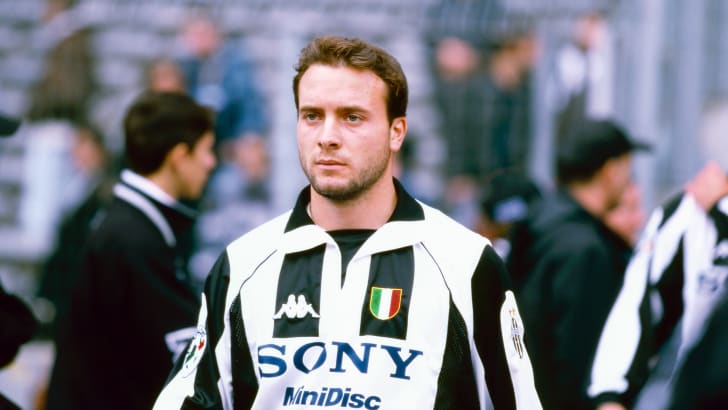
Still, when Pisa face Juventus, it feels like a match that sums up Birindelli’s life. Born in the shadow of the Leaning Tower, he grew up supporting Pisa, wore the club’s colours as a player and later as a coach. Yet his greatest triumphs came in black and white — 11 years with Juventus, during which he won three Scudetti, three Italian Super Cups, and an Intertoto Cup.
Interestingly, his first experience of top-level football came alongside Luciano Spalletti. In 1994, the coach from Certaldo had just begun his managerial career at Empoli, where Birindelli was a promising young defender.
“Luciano has always been curious and determined,” Birindelli recalled. “He was always looking for something different. Even in his first years as a coach, when we climbed from Serie C to Serie A, he came up with new ideas. You could already see that creativity and intuition were part of his skill set — he always had something new to invent.”
On Spalletti and Juventus
Could Birindelli have imagined Spalletti reaching such heights? “You could tell he had something extra,” he said. “From his relationships to how he managed situations, it seemed he was born to do that job. For him, Juventus came after the great disappointment with the national team, and when he least expected it. Coaching Juve now isn’t easy for anyone, but he has everything it takes to succeed.”
Before Spalletti became a coach, the two were teammates at Empoli. “He was a unifying figure for us young players,” Birindelli remembered. “An experienced footballer with great vision. Even near the end of his career, when he wasn’t fully fit, he was always a step ahead mentally. He read the game differently from everyone else. On and off the pitch, he was a teammate who gave great leadership.”
On Juventus’ Rebuild
When asked how it feels to see Juventus rebuilding, Birindelli was frank. “I remember a strong club and a strong team, one that had ‘never give up’ in its DNA,” he said. “A side that went after victory with determination, even in a ‘dirty’ way if necessary. Sometimes those traits seem to fade, and for someone who lived through another era, it feels strange.
“Making comparisons would be stupid, though: times have changed — communication, rules, and football itself. But I would like to see a more dominant Juventus again. Not just in results, which are a consequence, but in attitude.”
That experience gives him a unique perspective on the club’s present. “The mistake sometimes is changing too often and constantly chasing something new,” he explained. “You need stability and belief in a project. Changing every three or six months doesn’t work. New players then arrive to find others who’ve only been there a year or two — people who don’t yet have the leadership or DNA that existed when I joined in 1997. Back then, players had already won and they set the standard on and off the pitch.
“First of all, Juventus need to build a strong core of five or six players who stay over time and welcome new arrivals, helping them understand what it means to wear this shirt on and off the pitch.”
Consistency and Mentality
What has been missing most so far? “Consistency,” he said without hesitation. “Matches can be won or lost, but the attitude mustn’t change. You can’t approach one game well and then lose focus in the next. Even within a single match, there can’t be moments of brilliance followed by total lapses — that kind of up and down can’t exist. The habit of being responsible for this shirt must be trained every day, with people reminding you constantly of how much it matters.”
Who showed him that sense of responsibility? “It was all in the details,” Birindelli smiled. “I remember my first games — when we attacked, I could hear Ciro Ferrara and Montero yelling at me to close down the opponent faster. I thought, ‘But we’ve got the ball!’ These were players who had already won the league or the Champions League, but they still had that hunger and attention to every detail — always anticipating what could happen. No one can teach that. It’s experience, desire, something you have inside.”
He later tried to pass that mindset on to the next generation. “You don’t need many words,” he said. “It’s your behaviour that defines you as a leader or a teammate willing to help. Those of us who stayed even in Serie B had the experience, and we guided the younger ones — Marchisio, Giovinco, De Ceglie, Palladino — through an important path.”
Pisa, the City of His Heart
Talking about Pisa, Birindelli’s expression changes to one of pride. “I’m overjoyed,” he said. “When Pisa were in Serie A under Anconetani, I used to go to the Curva Nord to watch games. I still remember Kieft, Dunga, and Mannini in goal. Seeing Pisa back in this category fills me with pride.”
He admitted, though, that playing only one season there — in Serie B in 2008–2009 — left a mark. “I was unlucky,” he confessed. “My dream was to play for Juventus and then end my career with the team from my city. Unfortunately, I arrived at the wrong time — major financial problems, no wages, the club collapsing mid-season, relegated after being fourth at Christmas. It’s a painful memory; being relegated with your hometown club is never pleasant.”
Coaching Journey and the Modern Pisa
Birindelli later returned as a coach in Pisa’s youth system. “I experienced three different phases,” he said. “With Battini as president, there were financial difficulties and a limited budget. Then came Petroni — again, no stability or long-term plan. Fortunately, I later met Giuseppe Corrado, who relaunched the club. I began my journey in the youth sector just as my son Samuele was starting out, playing first in Serie C and later Serie B with Gattuso.”
Even now, he keeps a close eye on Pisa. “In my coaching staff, there’s another Pisano who’s just as passionate,” he smiled. “We watch every game together while travelling or at the hotel. We follow Pisa with great attention and hope they stay up.”
Thoughts on Gilardino and the Match Itself
“Gilardino is doing well overall,” Birindelli said. “There have been some negative performances, but that happens. In some matches, Pisa could have got more — I think their position in the table isn’t entirely fair. Every weekend’s a fight, though, and in January the club should make a couple of signings to give him more options.”
As for facing Juventus at the Arena Garibaldi, Birindelli warned that it’s never an easy trip. “Teams that come here find a passionate atmosphere — you can feel it on the pitch,” he said. “It affects both the opponents and those wearing the black and blue shirt. The players have a duty towards the fans, who follow them not only during matches but all week long. They show up at training, they escort the team from the hotel to the stadium. Anyone who thinks coming to Pisa is going to be a walk in the park is in for a surprise — as others have already learned.”
A Word on His Son, Samuele Birindelli
Finally, conversation turned to his son, Samuele, now a key player at Monza. “I’m proud of him,” Birindelli beamed. “He’s had a difficult path, but he’s grown with confidence and courage — from Pisa’s youth system to Serie C, Serie B, and now Serie A. Like in life, there are good and bad moments — last year came a relegation, but now Monza are fighting for promotion again.”
Does he see himself in his son? “In many ways, yes,” he admitted. “But he’s a bit better offensively, while I was stronger defensively.”