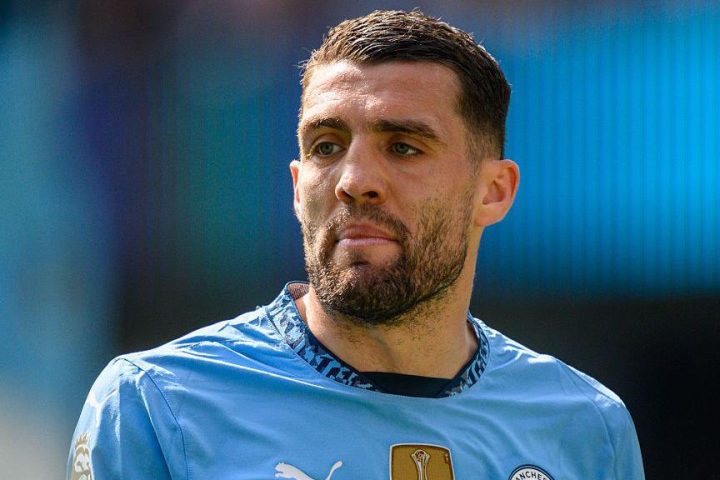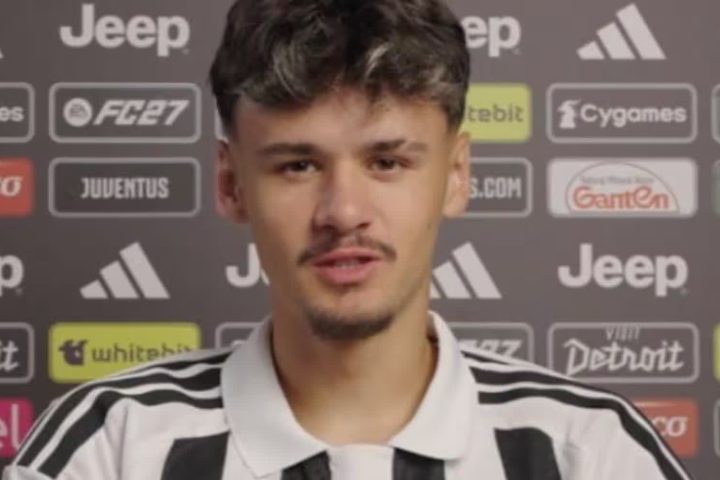


Alessandro Del Piero has delivered a scathing assessment of the current state of Italian football, attacking its lack of intensity, tactical courage and physical preparation. Speaking in the Sky Sport studio after another disastrous Champions League campaign for Serie A clubs, the Juventus legend did not hold back as he dissected why Italian teams are struggling so badly in Europe.
He began by acknowledging Atalanta as a rare positive example in recent years. “Atalanta in the last few years have been the most international team we have had, with more running and physicality,” Del Piero said, noting how they had often stood out for their intensity and style. Against Bayern Munich, he admitted, the level was different, but pointed out that against Borussia Dortmund they had shown “great things”.
“We Are Inferior in Every Aspect”
Del Piero then moved straight to the heart of the problem. “Everything is slower,” he argued, highlighting how Italian sides move the ball and think at a lower tempo compared to Europe’s elite. “The transmission of the ball from one side to the other, the speed that you have is not just a question of technique. I receive the ball and I move it quickly. Technique matters, but so does the mind.”
His judgement was ruthless: “In every respect we are inferior. We are inferior in engine, in talent. There is no point beating around the bush, it is the reality of the situation.” Del Piero also stressed the importance of the so-called ‘oriented control’: “I can play a pass on the spot, as we often see in the defensive phase with three centre-backs, or I can make oriented controls, which today in Serie A maybe three players do. Oriented control allows you to give direction and it changes the whole shape. In my opinion they should push much more in this direction, because it allows you to do half a dribble.”
He lamented the disappearance of the classic playmaker. “Nowadays it is difficult to be a number 10 because there are very few teams that look for a number 10. But on the other hand, since there are few, there is less competition. In theory, someone should shine a bit more,” he said. What irritates him most in the attacking phase is the obsession with sterile possession: “In attack, the thing that annoys me the most is that we want to consolidate our position. In the Champions League, when the ball is won back there is an immediate vertical pass.”
“Always Tired”: Fitness and Mentality Under Fire
For Del Piero, the issue is not only tactical and technical but also physical and cultural. “Our problem is that we get tired. It is always us who are tired, always in Italy always tired,” he snapped. “I have heard few coaches abroad complain about matches or say they are tired. You get yourself organised. We are talking about teams: you have to equip yourself accordingly.”
He underlined how modern football offers more resources and tools than ever before. “Today it is a different game: you have more players, you have more substitutions, you have more money to invest in physical preparation, in recovery, and so on. So there is more of everything. It is not enough just to talk about these things. Professionalism is needed in trying to improve the players, because there is room for improvement,” he insisted.
Del Piero’s warning was blunt: “There is room, because if others manage it and we think we are the best, but then we concede seven goals, as has happened, then something is wrong. Barcelona always play with the same players. Then if one gets injured, they take him out and put in another
Capello: “We Must Stop Passing Back and Start Taking Risks”
Fabio Capello also weighed in, focusing on time-wasting, lack of dribbling and the obsession with safe passes. He noted how Galatasaray were heavily whistled at Anfield for trying to waste time, just as they had done in Turin against Juventus. By constantly stopping play, Italian teams reduce the rhythm and intensity of matches.
“The intensity comes from the player who runs. The speed of the move gives you the speed of the ball,” Capello explained. “The most serious thing is that we have taken away responsibility from players to play a forward pass, now we always keep the ball. Now the pass back to the goalkeeper is considered the right thing.”
He identified a huge problem with risk-taking and dribbling in Serie A. “How do you break this way of thinking? By saying that you do not want that type of play,” he said. “We must say that the ball should no longer be played back to the goalkeeper, we must play vertically and make players take responsibility. When you win the ball back you have to play forward. The first idea has to be that.”
Capello also called for a radical overhaul of Italian football’s youth system. “The restart that Italy needs is to stop having league tables up to 13 years of age, just play and have fun. Up to 16 years old they must focus on technique and it must be the clubs who impose this,” he suggested. He pointed to the case of Vergara: “Vergara up to two months ago was the reserve of the reserve of the reserve. Now in two months he could already go to the national team. There is little courage to do things.”
Boban: “Too Tactically Restrictive, Talent Is Suffocated”
Zvonimir Boban tried to offer a slightly more balanced view but still confirmed the structural issues. “Last year Inter knocked out Bayern, it is not as dramatic as we think,” he noted, reminding everyone that Italian clubs have still produced major results recently. “The numbers show that some things are not going well in Italian football and we have known it for years, but a lot of this is down to tactics. Players are not allowed to play freely.”
Boban cited Como as a rare example of a clear and modern football idea. “Como can do it because there is a clear concept of play. There is only one number 10 in Italy and it is Nico Paz. Como are the only team playing 4-2-3-1,” he pointed out. He contrasted this with how the game was played in his era: “In my time they would slap us if we played the ball backwards. Is there a lack of talent? I do not see players like Del Piero or Baggio.”
For Boban, the main issue lies on the wings and in the use of wide players. “High intensity always depends on wingers and full-backs. In Italy, how many teams play with fast wingers? In Europe almost all of them do, it is a tactical issue, not about whether you can run or not,” he argued. He used Rafael Leão as a symbol of misuse: “Leão now in the 3-5-2 no longer manages to sprint because he cannot find space and he is not capable of doing it. He was signed to play as a winger, not as a second striker or a centre-forward. There is a lot that is tactical, it is something tactically backward.”
Condò and Costacurta: Rhythm, Dribbling and a Boring Product
Journalist Paolo Condò highlighted how Italian football suffers from constant interruptions and a lack of dribbling. “In our league, when a player goes to ground he wastes much more time, breaking the rhythm compared to a Champions League match, where no one stays down. Those extra five seconds lost for every whistle matter,” he observed. “And then in Serie A very few dribbles are attempted. That statistic is frightening, it alone is enough to explain the problems.”
Alessandro Costacurta, meanwhile, offered a more practical suggestion inspired by European football. “Especially in the round of 16 I saw goals scored from superb vertical passes, even from the goalkeepers,” he said. “We are very good at copying, maybe we will take inspiration.” He admitted to a growing sense of boredom with the current style of play in Italy. “It seems to me that we are getting a little bored with our football. The passes between goalkeepers and defenders are starting to bore even those in the stands,” he concluded.
From Del Piero’s “we are inferior in every respect” to Capello’s call to “stop playing it back to the goalkeeper” and Boban’s insistence that tactics are suffocating talent, the message from three of Italian football’s most authoritative voices is clear: unless Serie A changes tempo, mentality and courage, its struggles in Europe will only continue.