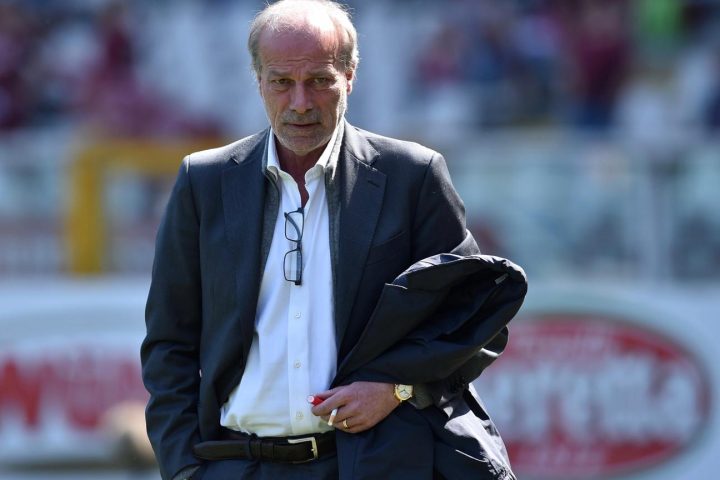


Sometimes the most important transfer confirmations come in the briefest of phrases. Asked about Randal Kolo Muani on the fringes of a public engagement, Giovanni Carnevali allowed himself a quiet smile and three words: “We are working on it.” For a man known for discretion and precision in his public statements, that admission — the first direct public confirmation from Juventus’s new chief executive — is more significant than its brevity suggests.
Why Kolo Muani Suits Everyone
Kolo Muani is, quite simply, the one attacking target who unites every voice inside the club. He appeals because his six-month loan at Juventus last season provided exactly the kind of grounding that makes a permanent move feel like a continuation rather than a gamble. He appeals because the price, whilst not trivial, is open to negotiation: PSG are asking €40 million, but Juventus believe that figure can be reduced — perhaps through a structure weighted towards performance-related bonuses.
Above all, he appeals because he is precisely the type of centre-forward Spalletti’s football demands: mobile and physically imposing, dangerous in the air, capable of intelligent movement to create and exploit space. A fluid game requires a fluid striker — and Muani embodies that combination of qualities more completely than almost any alternative currently available.
Spalletti’s Ideal Scenario — and the Realistic Compromise
The manager’s dream outcome is well understood within the club. Muani alongside a returning Vlahović would give Spalletti the complementary partnership he has long sought — an athletic, dynamic forward and a powerful, penalty-box striker working in tandem, each capable of coming off the bench to change a game when the other starts. That combination would represent genuine attacking depth of the highest order.
Should Vlahović’s renewal ultimately not materialise, Muani paired with Sorloth represents what Tuttosport describes as a more than reasonable compromise. Both are physical, powerful and tactically astute — the platform Spalletti needs to make his system work. Failing to secure any recognised centre-forward of this calibre, however, risks frustrating not just the manager but the entire environment surrounding the club, which expects at least one statement signing as evidence that the new era has truly begun.
What Carnevali Found When He Arrived — and What He Is Building
The bluntness of the situation Carnevali inherited on the Kolo Muani file was telling: he found the dossier largely empty. Between Juventus and PSG there had been, in practice, only a declaration of intent from the Italian side — no substantive negotiation, no agreed framework. Carnevali is now building that from scratch, with the considerable advantage that Muani himself is entirely committed to the idea of returning to Turin. The French striker has put every other approach on standby, keeping regular contact with former Juventus teammates — particularly his fellow French speakers — throughout his time at Tottenham. He wants to come back, he wants to play under Spalletti, and he is prepared to wait.
January’s failed attempt — when Tottenham manager Thomas Frank refused to sanction an early return because he felt the club could not survive without Muani’s creativity — is now simply historical context. The striker’s subsequent performances told their own story: he struggled against Premier League physicality but was genuinely excellent in the Champions League, finding space and raising the level of Spurs’ attack when the game opened up. That is the Muani who flourished at Juventus — and the one Spalletti is determined to have back permanently.
Carnevali is working. The sales must come first. But for the first time this summer, the club’s new chief executive has said so publicly — and that, in itself, is progress.