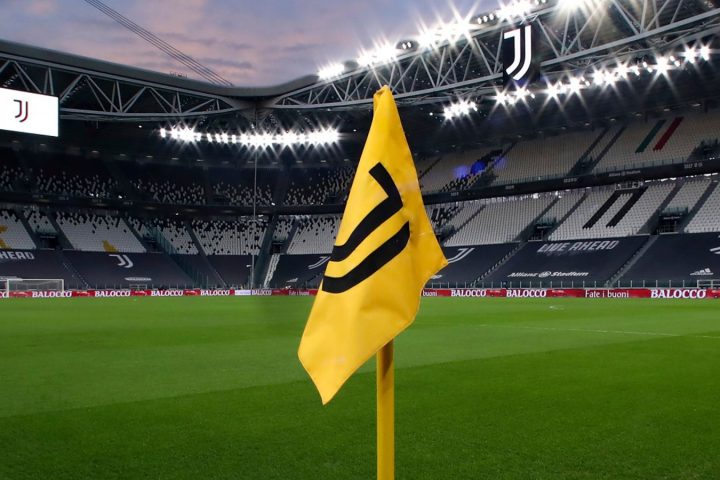


Crepi l’avarizia — may miserliness perish — once again. Consider the sums Exor has poured into Juventus since 2007 through successive capital increases: in total, €1.5 billion. Astronomical figures, enriched now by the latest move advanced on Tuesday during the Juventus Board of Directors meeting in Venice. A proposal has been tabled for a capital increase delegation of up to €250 million — “to support the strengthening of the equity structure and sporting competitiveness, possible upgrades of strategic property assets (first and foremost the Allianz Stadium), the valorisation of the brand, and economic and financial sustainability.”
What the €250 Million Is Actually For
The statement is notable for the order in which its priorities are listed. Sporting competitiveness comes first — Carnevali needs investment capacity to complete the squad rebuilding across the next two transfer windows. Property upgrades come second — the Allianz Stadium specifically is identified, with the implicit acknowledgement that the 15-year-old ground is beginning to show its age and that investment in its infrastructure is a strategic priority for a club planning to host the 2028 Conference League final and potentially fixtures from Euro 2032. Brand valorisation and financial sustainability complete the list — the broader institutional ambition of making Juventus a genuinely global commercial entity rather than merely an Italian football club with European visibility.
The capital increase is not merely a vehicle for absorbing losses. It is a mechanism for investing in the assets — human, physical, and commercial — that will generate the revenues to eventually eliminate those losses.
The €60 Million That Arrives Before the Assembly Votes
Exor has confirmed an immediate advance payment of €60 million as a versamento in conto futuro aumento di capitale — a down payment on its proportional share of the full capital increase, which will be formally voted on by shareholders at the 3 November assembly. The advance has been made to strengthen the balance sheet while the formal process proceeds, and its rapidity is itself a statement of institutional intent: Exor is not waiting for bureaucratic process before demonstrating commitment.
From the official communication: “A further confirmation of its long-term commitment to Juventus and of its confidence in the intrinsic value of the club.” The language is deliberate and unmistakable. The Agnelli-Elkann family does not regard Juventus as a financial investment requiring optimised returns. They regard it, as Pirisi writes with characteristic force, “as a primary asset — as indispensable as water and air.”
Context of Total Solidity — Owned Property, Stadium, J|Hotel
The third chapter of the article, paywalled under the title “Contesto di totale solidità,” maps the specific institutional asset base that makes the Exor commitment meaningful rather than merely generous. Juventus is among a rare group of European clubs that owns all of its strategic properties — from the Allianz Stadium to the Continassa training complex to the J|Hotel, acquired during the 2025-26 year through investment that partly explains the increase in net debt from €280.2 million to €331.1 million. These assets carry real values that exceed their book values — a balance sheet strength that the family and the management have consistently invoked as the foundation of an institution that, whatever the short-term losses, is structurally sound.
In nineteen years, Exor has invested €1.5 billion in Juventus. Yesterday they put another €250 million on the table. The reconstruction, in whatever dimensions — sporting, financial, physical — continues with the same commitment that has always defined this ownership. The losses, on the current trajectory, will extend through 2026-27. The improvement thereafter is the plan. The capital is the guarantee that the plan has the resources to reach its destination.