
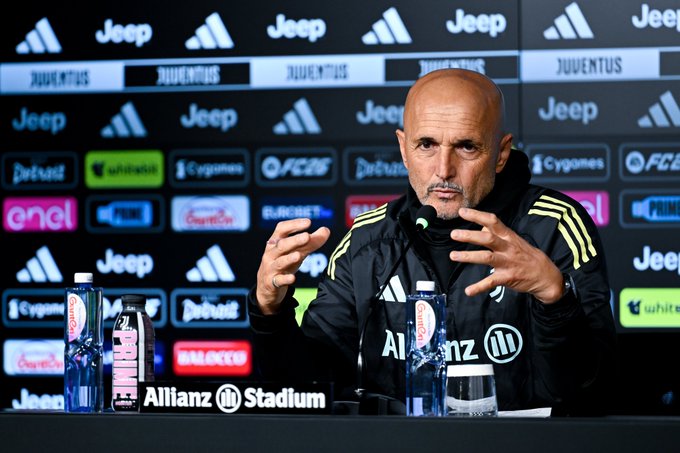
The pause is over. The conference table is set. And Luciano Spalletti, with his characteristic combination of tactical precision and communicative warmth, addressed the full range of questions on the eve of what is the most consequential single fixture of the early season — Cagliari away, the trap at the top of the Sardinian hill, with the hosts two points clear in the table.
The International Break — “There’s No Other Medicine Than Long Rest”
On managing a squad that returns from multiple time zones and multiple nations in different states of readiness: “There are pros and cons in everything — but it is clear that management is done in a simple way in these situations. Long break, you give long rest periods to restore the accumulated fatigue. There is no other medicine. It is managed this way, evaluating and personalising.”
Zhegrova — “He’s One of Those Who Changed Shirt in the Last Two Sessions”
The single most important selection indicator of the entire press conference. When Spalletti says a player has “changed shirt” — moved from the non-starter group to the starter group in training — it is the clearest possible signal short of announcing the eleven. Zhegrova has done precisely that in the last two sessions before departure for Sardinia: “He is one of those who has changed shirt in the last two training sessions, between starters and non-starters.” The full u-turn is now complete in competitive practice, not just in words. Zhegrova starts — or at the very least begins among those ready to start — at Cagliari.
On the rest of the squad: “The others are well, they have all returned in the right mental condition, they have trained well in terms of concentration and rhythm in these last few days. Even in this case we personalised the loads according to when they returned. We are happy to have these players available in the condition they are in.”
“Pisacane and Giulini Have Deserved Their Points — But Not the Win Last Year”
Spalletti’s tactical analysis of the opponent is sharp and specific — and his closing comment on the January defeat is the sharpest thing said at the conference table: “Sometimes statistics need to be read and placed in context — otherwise they remain statistics that overturn what happens in reality. Pisacane and Giulini have deserved the points they have. But they did not deserve that win last year. That one they did not deserve.”
On the tactical problem Cagliari pose: “They deliberately concede you some space and invite you to play the game in their half, having players who flip the play well and combine well in tight spaces, thus negating the re-press. As in previous years, they manage to bring certain players into the limelight — and this year they are doing it with Maldini. We will need to be very good, very decisive, very alert, very intense. If you leave spaces they know how to behave.”
Chapters Two Through Five — Cambiaso, Kolo Muani, Douglas Luiz, Ambitions, Koopmeiners and Sarr
The second chapter — “Le condizioni di Cambiaso e la fame della squadra” — addresses Cambiaso’s fitness status (he returns from his ankle issue and is available) and the competitive hunger Spalletti expects from a squad that has had three weeks to reflect on ten points from five matches.
The third chapter carries the most tactically significant Kolo Muani passage and the Douglas Luiz endorsement. On the French striker: specific instructions have been given — presumably along the lines of staying closer to the penalty area rather than dropping deep, which the Gazzetta reporting from earlier in the week had identified as the core technical challenge for the coaching staff. On Douglas Luiz: “He doesn’t drive me crazy” — meaning the Brazilian’s performances have reached a level at which he no longer provokes concern, only satisfaction. “Altissimo livello” — the highest level. The transformed Douglas Luiz is now, in Spalletti’s language, a certainty rather than a project.
The fourth chapter — “Obiettivi e rabbia negli occhi: ‘Abbiamo ambizioni forti'” — delivers Spalletti at his most competitive: a squad with strong ambitions, anger in its eyes, and the full awareness that Sunday night in Sardinia is the correct place to demonstrate both.
The fifth chapter — “Le parole di Spalletti su Koopmeiners e Sarr” — addresses the midfield hierarchy question that has consumed Italian football journalism all week. The specifics are behind the paywall, but the framing — with Sarr having “changed shirt” as a starter and Koopmeiners’s status still to be determined match by match — tells its own story.