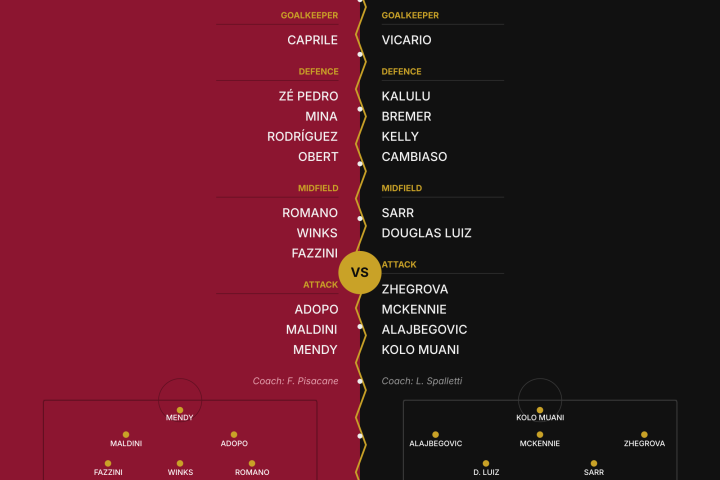

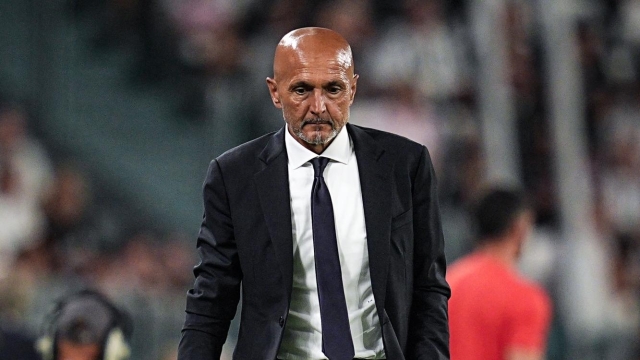
Juventus rescue a point at the Unipol Domus thanks to Kolo Muani’s close-range header from Alajbegović’s cross, after going behind to Maldini. The bianconeri controlled possession for long stretches, conceded, reacted, and levelled — only for the crossbar to deny Kolo Muani a winner in stoppage time that would have changed the character of the evening entirely. In the final moments, Spalletti and Pisacane were both sent to the stands in a fiery touchline confrontation. Five chapters of post-match analysis followed.
The Pisacane Confrontation — “Nothing Happened”
Spalletti addressed the red card incident first and with characteristic deflection: “Nothing happened. I told him they were good, that they play well and that they also know how to waste time. And he said to me ‘What does time-wasting mean?’ and the referee sent us both off. Nothing particular, all quite normal, all fairly normal. Nothing happened.” The dismissal of what appeared from the outside to be a fierce face-to-face encounter is itself a kind of statement — Spalletti does not intend to grant it significance, and doing so allows him to move immediately to what actually matters.
The Tactical Key — “The Two-Striker System Was Already There From the 25th Minute. Nico González Is Our Best Header of the Ball”
The most revealing passage of the entire post-match and the one that will shape selection decisions for the October fixtures. Spalletti reframes the narrative: the move to two strikers was not a second-half adjustment forced by falling behind — it was already in the plan from the 25th minute of the first half, when McKennie moved to the left and González began operating as a second striker in the same role that Woltemade would later assume.
“Kolo Muani more comfortable when I put the two strikers on? Yes — but in the first half at the 25th minute I put McKennie on the left and there was Nico doing what Woltemade then did.” And then the sentence that will travel furthest: “Actually, Nico González is the strongest header of the ball we have. He is a second striker and I played him as a second striker. The system has been the same since I moved McKennie: Kolo as the first striker and Nico as the second but they can switch. If Kolo is free to move and goes to interpret some situations — which I liked — he becomes harder to mark. Nico was in the area in the first-half chance, on his knee. We just need to have the determination of those with strong heads.”
“I’m Playing for Finishing My Career Well”
The second chapter carries the article’s most personal and most striking quote. Asked about what this Juventus season means to him personally, Spalletti answers with the directness that has made him one of the most quotable figures in European management: “I am playing for finishing my career well.” The sentence is simple. The weight behind it — a manager in his late sixties, at the biggest club in Italian football, with everything invested in making this work — is not.
“Things to Fix” — the Honest Third Chapter
The third chapter acknowledges what any honest reading of the first half at Cagliari made clear: there are problems in the structure that have not been resolved. Juventus conceded too easily, allowed Maldini the freedom to operate without sufficient defensive pressure, and created very little from open play before the second-half change. Spalletti is not a manager who reads a 1-1 draw away from home in a difficult fixture as a satisfactory result — and he said as much: “There are things to fix.”
Pre-Match Verdict on Kolo Muani — “He Has Various Qualities”
The fifth chapter contains Spalletti’s pre-match remarks specifically on Kolo Muani — made before the player produced the goal that had been waited for across seven competitive matches. The assessment was balanced and forward-looking: the qualities are real, the goal will come, and the partnership with a physical forward like Woltemade is the tactical configuration most likely to allow those qualities to express themselves. On Sunday night in Sardinia, in the space of approximately 45 second-half minutes, that assessment proved exactly right.