
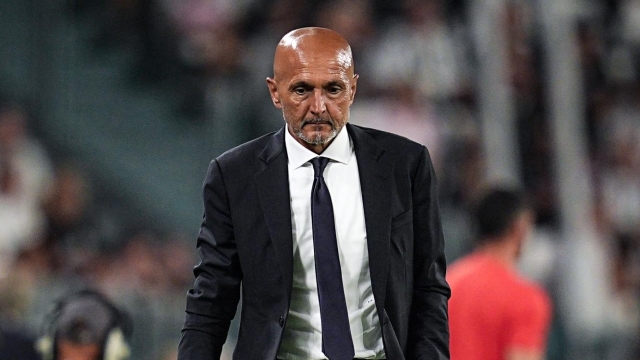
The five-chapter post-match interview on DAZN is the most searching and most troubled public statement Spalletti has made since taking the Juventus job. It does not contain excuses. It contains questions — about individuals, about the collective, and, ultimately, about himself.
“A Juventus That Was Clearly Inferior — No Idea Where to Take the Match”
The opening diagnosis is unsparing: “We clearly saw an inferior Juventus — without control of the ball and without ideas about where to take the match. It is difficult to give explanations. Since Thursday we have done nothing after returning at half past four in the morning. We preferred to let them recover. Then we tried to change things today with six new players, but we were slow in our legs and our heads. If you arrive late there are no tactics or systems — without rhythm and heart…”
The Thursday reference is the Celta Vigo return flight landing at 4:30am. The decision to prioritise recovery over preparation is contextualised, not used as a justification. Spalletti is not blaming the fixture congestion. He is explaining the conditions and then confirming that they are not sufficient excuse for what was seen.
“Many Attitudes Did Not Please Me. There Are Young Players Who Fight and Others Who Let Themselves Fall at the First Shove”
The sharpest passage of the interview and the one that will travel furthest: “I agree — Lazio came out at a completely different rhythm. Many things must be analysed: no rhythm, no ideas, no running, no willingness, and fragile in duels and when things didn’t go well. Many attitudes did not please me. The important thing is to show a reaction and not let yourself be abandoned to events. Our future is not determined by good fortune, but by our will. There are young players who fight and others who, at the first shove, probably let themselves fall to the ground — but that is always part of a person’s character.”
The distinction between those who fight and those who fold at the first contact is the competitive and character diagnosis that echoes what Tacchinardi said from outside, what Bremer said after the match from inside, and what Spalletti himself demanded before Celta Vigo. The demand went unmet against Lazio.
“I Was Surprised by the Performance. I Need to Self-Analyse My Relationship With the Squad”
The most institutionally significant passage — the one that marks the depth of the crisis: “What needs to change? We will do analyses and something needs to be modified. Even I was surprised by the performance. I want sharing, I want to involve the group, I want a good relationship with the players. I will need to self-analyse my relationship with the squad. I have a sincere relationship with them and I think they realise on their own that what we did today is not acceptable.”
A manager who says publicly that he needs to self-analyse his relationship with his own squad is a manager acknowledging that something in the dynamic between him and the players has not taken the shape he intended. It is, by Spalletti’s standards, an extraordinary statement of uncertainty.
“The Supporters Cannot Be Proud of Us. Fragility That Comes From the Head”
The third and fourth chapters address the relationship with the Allianz Stadium and the nature of the fragility exposed. The supporters who whistled — the same supporters who sang through the European nights against NEC and Celta Vigo — cannot, he acknowledges, be proud of what they saw. The fragility is not physical, not tactical: “It comes from the head.” A squad whose mental architecture is not yet strong enough to hold firm when Lazio establish their dominance in the first half hour is a squad that needs a different kind of work from the training pitch — and a different kind of leadership response from within.
“Does the Squad Follow Me? Today I Don’t Know”
The fifth chapter — “La squadra mi segue? Oggi non lo so” — is the single most alarming sentence of the entire post-match. A Juventus manager at the Allianz Stadium, on a Monday morning, with Rennes arriving on Wednesday, admitting publicly that he does not know whether his players are following him. The season’s character question — the venom, the bianconero DNA, the alarm clock — has arrived at its sharpest possible formulation. The answer to that question will define everything that follows.