

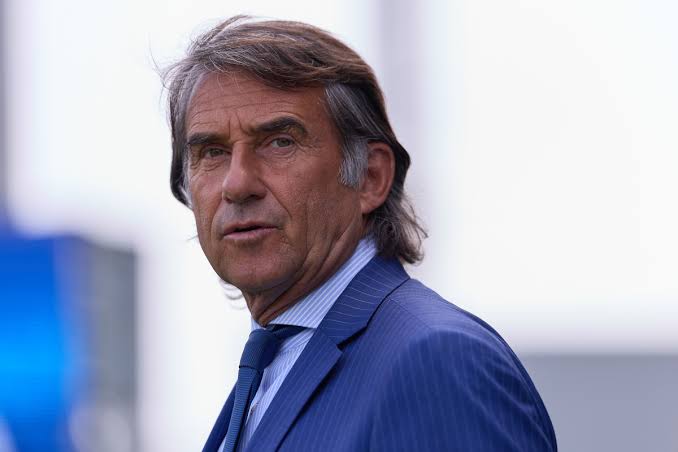
Giovanni Carnevali paused before the match at the Mapei Stadium — the ground he spent thirteen years helping to build — and spoke to DAZN with the measured honesty that has characterised every public intervention since his arrival at the Continassa. The words were few, the substance was significant.
“Thirteen Years Here Are Not Easily Forgotten — It Was a Journey That Was Human as Well as Sporting”
On the emotion of returning to Sassuolo as the visiting club’s chief executive: “Thirteen years here are not easily forgotten. It was a journey that was not only sporting but also human.” He did not elaborate further. He did not need to. The brevity said everything about the depth of the feeling.
“Spalletti Says Goal of the Ex? The Manager Is Strong and Funny — the Objective Is to Win”
On Spalletti’s pre-match joke that Carnevali would score the ex-manager’s goal if allowed to play: “The manager is strong and likeable — what is needed is to put out a formation that can score. It is a difficult match. The objective is to win.”
“We Tried to Build a Competitive Squad — the Schedule Is Demanding, but the Attacking Pair Has Great Quality”
On the squad as a whole and the attacking partnership being assembled: “In the market we tried to build a competitive squad. The squad is good but the commitments are many. The attacking pair has great quality — the manager will decide.”
“Could We Have Done More in the Market? Yes — but I Have Only Been at Juventus for Three Months”
The most honest and most consequential passage was delivered with characteristic directness. Asked whether the summer’s transfer business had been limited by circumstances, Carnevali did not reach for excuses or diplomatic deflection. “It is not only a question of time but also of situations — we reflected on the qualities of certain players. I have been at Juventus for three months. Could we have done more? Yes — but we are satisfied with what we have done.”
It is one of the most candid public admissions of a director’s own window’s limitations in recent Italian football. He does not claim the summer was perfect. He acknowledges the gap between ambition and reality. And he frames it in the context of the extraordinary constraints — financial, time-based, and structural — that defined his first ninety days in office. The humility is the most powerful element of an already pointed statement.


