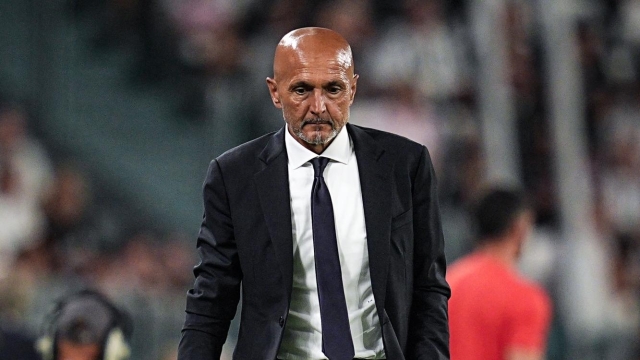


He felt the need to be close to the team. He sensed its necessity — to demonstrate once more how united the Juventus world is at this particular moment. John Elkann watched Sunday’s match against Atalanta in person at the Allianz Stadium, and left satisfied: compliments were extended to Luciano Spalletti and to the group, a warm message of support in one of the most delicate phases of a season that has already tested the institution’s collective resilience to its limits.
The Sassuolo Wound — and How It Was Healed
The defeat at Reggio Emilia left marks on the morale of the entire black-and-white world. Not the loss itself, but the manner in which the team lost its references and its spatial discipline — disoriented by Sassuolo’s pressing fury in a way that felt, to those watching closely, more alarming than any single defeat ought to be. The 5-0 against NEC had already restored the calm that was needed — it appeared straightforward, but the team had put the match beyond doubt in the first half, which was the clearest possible indication of collective intent and focus. The Atalanta match provided the confirmation.
Elkann and Spalletti — a Thread That Has Never Broken
The institutional relationship between Elkann and Spalletti is the detail that Tuttosport’s Paolo Pirisi identifies as the most important constant in a week of exceptional turbulence. The first compliments arrived even after last season’s away match at Reggio Emilia on 6 January — the promise already embedded in those early conversations that the partnership between Spalletti and Juventus would continue regardless of the outcome of the Champions League race. The contract extension was confirmed in April, before anyone knew whether the bianconeri would qualify for Europe’s premier competition. It was, Pirisi writes, the most concrete possible demonstration of Elkann’s personal conviction in the manager he had chosen.
That conviction did not waver after the Sassuolo defeat. It did not waver in the days when the Conte speculation was at its loudest. And it is clearly as strong as ever on the morning after a victory against Atalanta that demonstrated, for the third time in a week, that the project is moving — slowly, through an injury crisis of extraordinary severity, but moving — in the right direction.
The Injuries Are a Theme — but Not an Alibi
Elkann knows the full picture of the medical situation and has absorbed it with the same zero-alibi philosophy that Spalletti himself has adopted publicly and privately. Kolo Muani’s finger fracture — now successfully operated — does not concern him. The others require time: Cambiaso is the only one expected to return after the break; Cabal, Boga, and Ekhator need considerably more. And the four long-term cases — Yıldız, Thuram, Locatelli, Grabara — are known, documented, and accepted as part of a season that has demanded too much from too few too soon.
The owner turned the club inside out in the summer. The revolution is complete. What remains is patience, trust, and the kind of institutional steadiness that a manager navigating this level of adversity needs as much as any tactical solution. On Sunday evening at the Allianz Stadium, John Elkann provided it — in the most direct and human way available. He was there. He watched. He congratulated. The thread, as it has always been, remains unbroken.