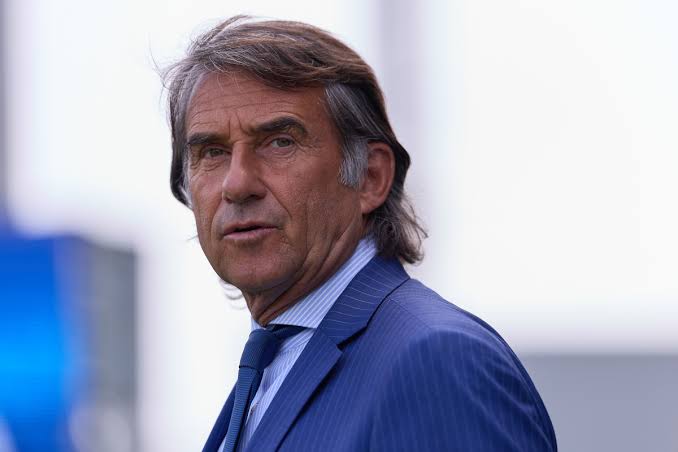
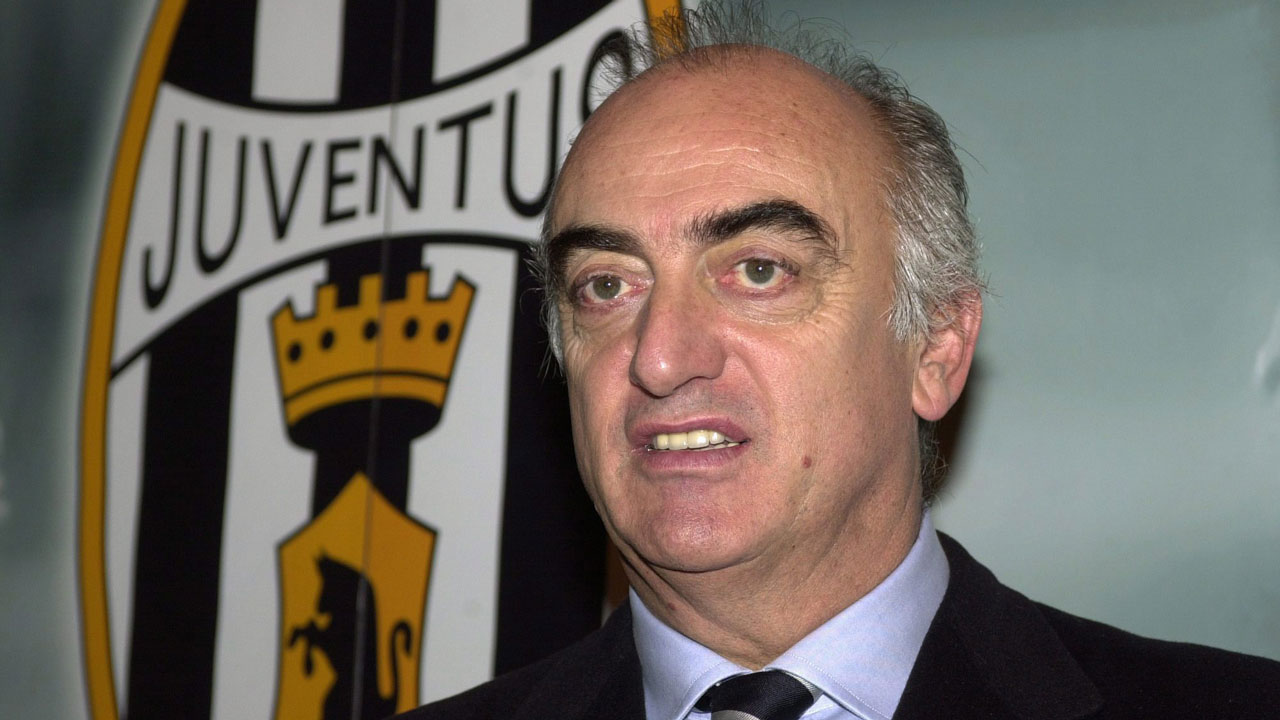
Antonio Giraudo has chosen his moment with the precision of a man who has spent twenty years waiting for it. On the morning of his eightieth birthday, the former Juventus chief executive — who ran the club from 1994 to 2006 alongside Luciano Moggi, built the most successful domestic dynasty of the modern era, and was subsequently engulfed by the Calciopoli affair — speaks exclusively to La Stampa for the first time since the scandal broke.
The timing is deliberate and explained with characteristic directness: “I have decided to speak now because the context in which the story can be told has changed. Today, all the ordinary criminal proceedings have concluded without a single conviction. But there is also a new development regarding sporting justice” — a reference to the European Court of Justice ruling in the Agnelli and Arrivabene case that has formally established the inadequacy of the Italian sports justice system’s judicial independence.
“A Media Pillory Born of Envy — a Mouse That Gave Birth to a Mountain”
Giraudo’s characterisation of Calciopoli is unsparing and unrepentant. “A media pillory without precedent — born of the envy of those who could not beat us on the pitch.” His central argument is one he has clearly rehearsed across twenty years of enforced silence: “The true consequence was to sink Italian football. When you count up the results, it was, to invert the formula, a mouse that gave birth to a mountain.”
The mouse, in his telling, is the picture that emerged at the end of years of criminal proceedings: “No championship was altered.” He invokes the words of Sandulli, then president of the Federal Court: “A world of bad habits, not classic illegalities.” And he adds a pointed contemporary observation: “There seems to be considerable discussion at the moment about a certain ‘Arbitropoli’. And the telephone is apparently still warm.”
“In the Triad — I Was in Charge”
The question of internal governance within the famous triumvirate of Giraudo, Moggi, and Roberto Bettega receives a frank answer. “In the triad — I commanded.” It is a statement that has never been made with such directness in public before, and one that shifts the internal balance of responsibility in a way that revisionist accounts of the period have sometimes obscured.
“Moggi Destroyed Himself”
On the colleague whose name has been most publicly and persistently associated with the Calciopoli affair: “Moggi destroyed himself.” It is three words — economic, final, and entirely without additional embellishment.
“Berlusconi Was the Greatest President I Encountered — but I Could Never Have Betrayed Umberto Agnelli”
One of the interview’s most surprising passages concerns Silvio Berlusconi, who approached Giraudo on two separate occasions to recruit him for AC Milan. “He was the greatest president I encountered across my twelve years in football: competent, passionate, generous — he knew how to choose, develop, motivate, and defend his people to the hilt. The first time Vittorio Feltri came to see me and said the Cavaliere was interested for Milan. The second time was at Palazzo Grazioli, just the two of us. He flattered me. But I could never have betrayed Umberto Agnelli.”
The European Court Ruling — and Why It Changes the Story
Giraudo is explicit about why the European Court of Justice’s ruling on the Agnelli and Arrivabene case has been the catalyst for his decision to speak publicly now. The ruling — which established that sanctions from Italian sports justice bodies must be subject to review before a genuinely independent court — does not exonerate him. But it does, in his reading, reshape the entire institutional landscape within which his own case was adjudicated. A system that has now been found by Europe’s highest court to fall short of the standards required for judicial independence is the same system that produced his lifetime ban from Italian football.
The Man Behind the Administrator — From Jesuit Schools to Umberto Agnelli
Giraudo was born in 1946, played as a midfielder for Pertusa in his youth — “undisciplined on the pitch, extremely disciplined in his studies,” as La Stampa’s introduction describes him — attended Jesuit schools, took a degree in economics, began immediately as a construction entrepreneur, and then encountered Umberto Agnelli. The rest is the history of Italian football’s most dominant club over twelve years. He is now 80. He lives in London, working in property. And he has finally, after two decades, decided to speak.