
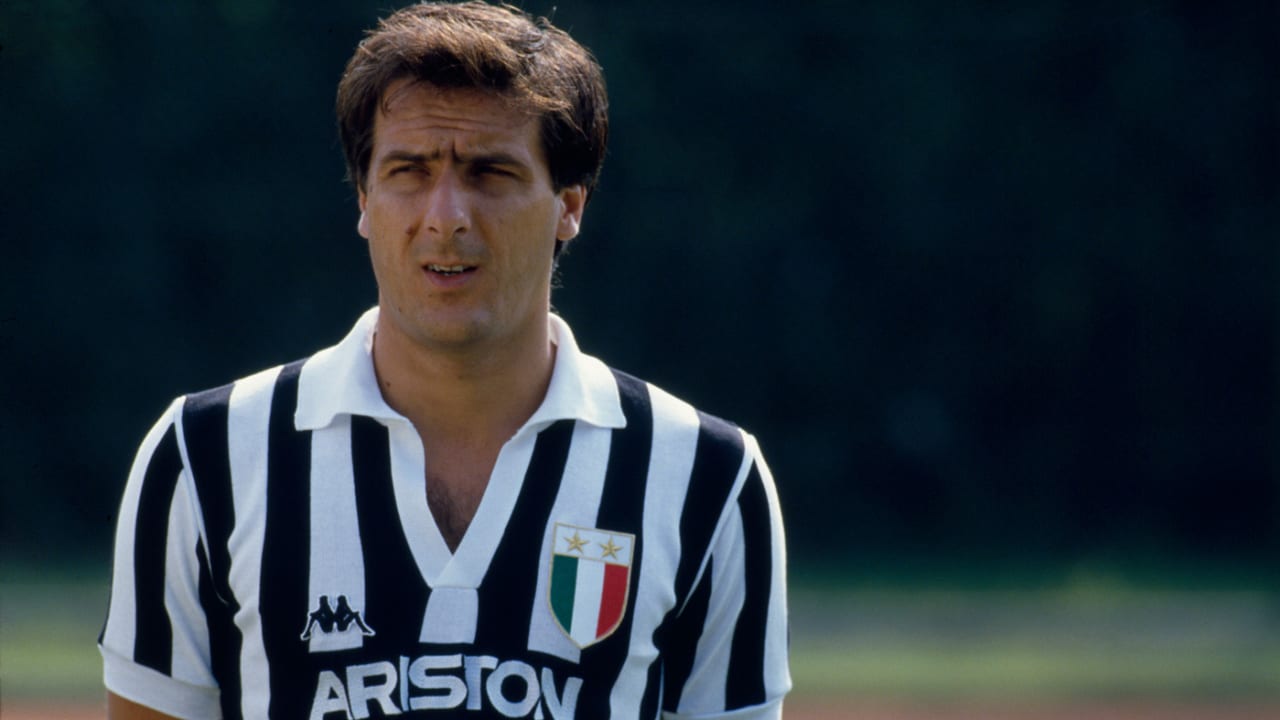
Mariella Scirea never met Sandro Mazzola in person. But she admired him — not as a supporter of Inter, which she emphatically was not, but as a person who loved football and who saw in the Inter and Italy captain a quality that spoke to her in the most personal possible way.
“I always liked Mazzola very much. He had that way of running — fluid, light, without looking at the ball — that reminded me enormously of Gaetano.” The observation, delivered with the quiet certainty of a woman who watched her husband play thousands of times, carries the weight of genuine footballing knowledge. Gaetano Scirea and Sandro Mazzola: different shirts, the same elegance, the same civilised presence on the pitch. The same generation of Italian football made flesh in two men who played against each other many times, with great mutual respect.
“The Silence Was Ruined by Idiots — But I Didn’t Want to See Them Become Protagonists”
On the Curva Sud incident, Mariella’s response was immediate and unconditional — but measured with the wisdom of someone who knows that excessive attention can itself become a kind of reward. “How can you do that? You cannot defend a gesture like that. On one hand it comforts me that the rest of the stadium reacted, trying to drown out those idiots — but whether it is ten people, a hundred, or a thousand, it doesn’t change anything. What a shame. I almost don’t want to speak about it, because I am afraid of making them protagonists and stimulating copycat behaviour. But you cannot not condemn it.”
On the broader cultural deterioration that produces such moments: “I don’t know — many reasons. I think about what has inspired the generations of the last twenty years: reality television, gossip, the cult of money, luxury, appearance. I am sorry to make the speech of an old person — but if you have not had great examples to look up to, in the end it is more likely that you do stupid things like failing to respect someone who has died.”
“Gaetano Would Have Been Horrified — and Ashamed”
The detail that transforms this from a comment on the incident into something more personal: Gaetano Scirea had Mazzola as one of his childhood idols. He grew up wanting to be a mezzala, precisely in the way Mazzola had been before him. He worshipped the player he would later line up against in some of Italian football’s greatest matches.
“He started as a mezzala himself. And he would have been horrified by what happened on Sunday at the Stadium. He would certainly have been ashamed.” And then, turning the spotlight back onto the broader culture of the stadium: “I was ashamed too — but there is another thing that makes me angry.”
“I Would Have Liked to See This Indignation on Other Occasions Too”
The passage that carries the deepest personal charge concerns an occasion at the Franchi in Florence — the specific wound Mariella has carried for years without ever having been given the public acknowledgement it deserved. “A few years ago I was at the stadium with my son Riccardo and the Fiorentina curve had greeted us with writing on the walls of the Franchi: ‘Scirea burns in hell.’ Can you imagine? Burns… I felt enormous pain. And the day after there was a small item in the newspaper and that was the end of it.”
The point she draws from the contrast is sharp and entirely credible: “Beyond my personal pain, I have the impression that when Juventus are involved there is a greater willingness to punish — to make an example. When it happens elsewhere, people look the other way. It seems as if everything always goes smoothly in other clubs’ stadiums. But it doesn’t: respect is missing everywhere.”
Scirea and Mazzola — the Same Human Ground
The interview closes with the reflection that brings everything back to where it began — two men who competed fiercely and lived well, who wore different colours and shared the same values. “Gaetano and Mazzola — even though they wore different shirts and certainly showed great rivalry on the pitch — I believe that on a human level they were on the same ground. And that is certainly a source of pride for all supporters of both Inter and Juventus.”
On the moral of the entire episode, Mariella’s final words are the most human and the most universal of all. “All people who have lost their lives have the right, as human beings, to be shown respect — it is true for Mazzola and it is true for all those who have lost their lives, including my husband. You know something? He and I used to embrace each other a great deal. Now I miss his embraces enormously — I miss being enveloped. The truth is that people should embrace each other more.”