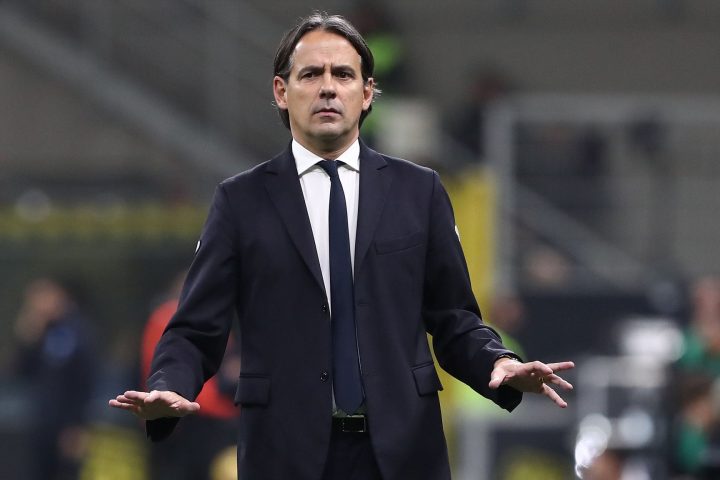


To understand what is happening inside Juventus, you only need to look at what has not happened in the hours and days since the Lazio disaster. No emergency visit to the Continassa. No summit convened. No crisis table assembled to plan the next steps. The ownership line has not shifted by a single comma: total and completely unaltered confidence in Luciano Spalletti’s technical project. This is the position that the ownership has asserted forcefully — from more than 7,000 kilometres away. Specifically, from Detroit, where Exor CEO John Elkann was on Tuesday attending to extra-football business matters of an entirely different order.
The Photograph on the Shelf — a Mutual Promise
Tuttosport’s Lorenzo Aprile deploys an image that carries specific institutional weight. There is a photograph of Elkann sitting in the dugout alongside Spalletti — taken just before the home match against Juventus Next Gen on 17 August — still on the shelf at home. It represents a mutual promise: to restore Juventus, side by side, to being Juventus. It is not a casual image. It was the specific framing of a relationship and a project that Elkann entered into with full awareness of the time and difficulty it would require. The early-season stumbles have not altered that commitment from his side.
The Tuttosport reporting is direct about what these defeats have confirmed rather than revealed: what was feared at the start of the project is now visible. Specifically, that this squad — beyond its purely technical limitations, particularly the desperate need for an experienced, international-level playmaker in midfield — lacks temperamental leaders with a capital L. The Bremer episode did not create that problem. It illuminated it.
“Not Anger, But Despondency” — the Second Chapter
The emotional register at ownership level is characterised specifically: not anger at the Lazio result, but despondency. The distinction matters. Anger produces reactive decisions — sackings, emergency summits, public statements. Despondency produces something harder: the recognition that the problem is structural and cannot be resolved by a single managerial change, combined with the weight of understanding how far there still is to travel. Elkann from Detroit, processing the Lazio result alongside business commitments that have nothing to do with football, is not panicking. He is reassessing. And the reassessment is pointing in the same direction as before.
“Dialogue and Compactness” — the Third Chapter
The third chapter — “Dialogo e compattezza” — frames the specific instrument Spalletti is using to navigate the crisis: dialogue, not decree. Individual conversations with key players. The squad meeting that addressed the Bremer situation. The insistence on self-analysis before collective critique. This is, in Tuttosport’s framing, the approach of a manager who has not panicked and has not resorted to confrontation — but who also, as his own DAZN post-match made clear, is not certain that the dialogue is landing. The Rennes match on Wednesday evening is the first opportunity to find out whether it has.