

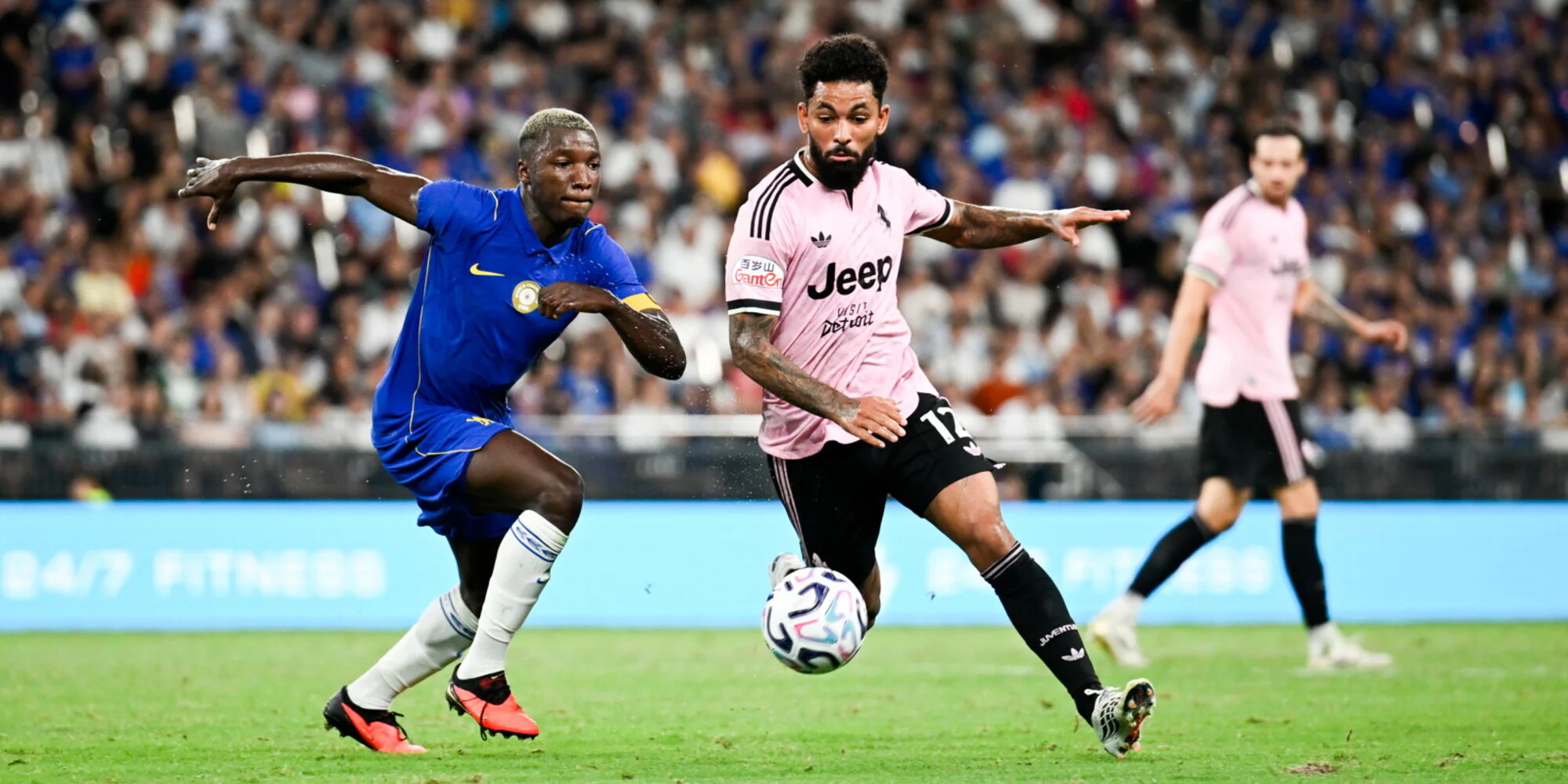
Juventus are not yet beautiful. But they are showing something considerably more important in the early stages of Luciano Spalletti’s first full pre-season in charge: discipline, organisation, and a collective spirit that was conspicuously absent for long stretches of last season. After four pre-season matches — against Basilea, Standard Liège, Nizza, and Chelsea — the team has not conceded a single goal. In August, against opponents who include the English champions, that is not a trivial statistic.
The Defensive Foundation Is Real — and Spalletti Has Built It Deliberately
The clean-sheet record is not merely a product of the modest quality of pre-season opposition — yesterday’s 1-0 win over Xabi Alonso’s Chelsea speaks for itself. It is a reflection of a specific and deliberate tactical and psychological approach that Spalletti has been instilling from the very first day of preparation: collective compactness, active error correction, and a refusal to allow individual mistakes to become team problems. Players are looking after each other. The defensive shape holds. The intensity is sustained.
The physical picture is similarly encouraging. Juventus have matched and at times exceeded Chelsea’s intensity and athleticism — a club that, for all its summer transfer activity and strong preparation, is objectively further along in its readiness for competitive football. That Spalletti’s squad is coping is, at this early stage, a meaningful sign.
Saturday’s Inter Test Is the Real Benchmark
The friendly against Cristian Chivu’s Inter in Perth on Saturday provides the most demanding possible final pre-season examination — a match against the reigning Italian champions that, as Tuttosport’s Guido Vaciago notes, can never truly be treated as a friendly, regardless of the occasion. With exactly two weeks separating that fixture from the start of the competitive season, the test will either validate the encouraging early impressions or raise questions that must be answered quickly.
The Transfer Window Matters More Than Perth
But it is what happens off the pitch over the next 25 days — not what unfolds in an Australian stadium on Saturday — that will ultimately determine whether the new Juventus has the tools to genuinely compete. The squad remains incomplete. A goalkeeper is still required. A central defender who can play from the left is on the agenda. Another attacking option beyond Kolo Muani is needed. And above all else, a midfielder — the one position that has been most obviously and persistently lacking all summer — has not yet been addressed.
That midfield gap is being kept open by a structural problem: the difficulty of moving on the players who are already there. Koopmeiners, Douglas Luiz, Arthur — three assets whose departures have been sought for months but who have not yet found new homes. Until at least two of them move on, there is no room, financially or in terms of squad numbers, for a meaningful new arrival in the engine room.
The Douglas Luiz Question That Is Dividing the Fanbase
Into that context falls the summer’s most debated internal question: what to do with Douglas Luiz? His goal against Nizza and his subsequent positive performance against Chelsea have genuinely re-opened a debate that had appeared settled. Spalletti himself has spoken warmly of what he saw — “the characteristics I was looking for” — without fully committing to the redemption narrative.
The stakes are clear. If Spalletti can resurrect Douglas Luiz — the player who cost €50 million from Aston Villa, earns over €9 million gross per year, and has a book value of €29 million on the balance sheet — he gains an immediately valuable midfield resource without spending a euro. It would be, as Vaciago describes it, like being gifted a decisive piece at no cost.
The risk is equally clear. Douglas Luiz has been given opportunities before — at Nottingham Forest, at Aston Villa on loan — and has failed to consistently deliver. Whether Spalletti, with his extraordinary track record of transforming creative midfielders, can achieve what those other environments could not is the question that will not be answered until competitive football begins in earnest. It is, as even his admirers acknowledge, a high-risk wager.
The Inter friendly will not resolve that question. The window will not close it. Only the season itself will tell whether one of Juventus’s most expensive recent acquisitions has finally found the environment in which he can flourish.