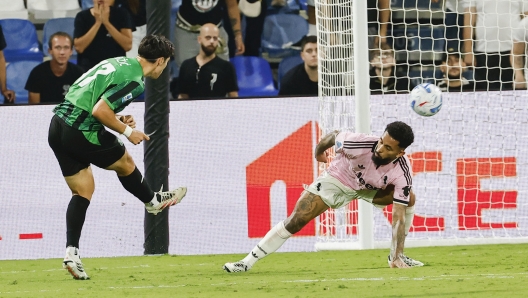

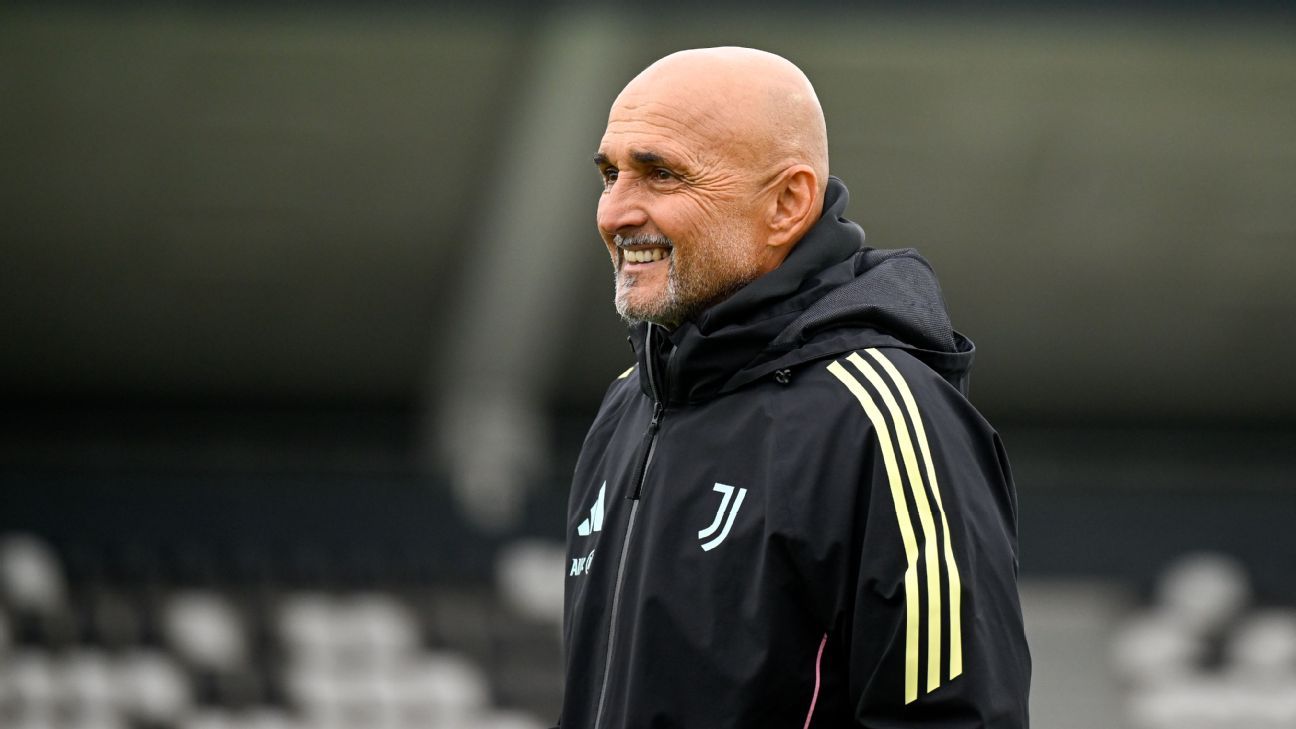
No chairs were thrown. Nobody shouted. The directors — regularly present at the Continassa — had no need to make their position known after the wretched night at Reggio Emilia. A religious silence fell over the training ground. But that silence, Tuttosport’s Paolo Pirisi makes clear, was full of disappointment and bitterness. The defeat to Sassuolo, and in particular the management of its final minutes, is for now categorised under the heading of grotesque episodes. The episodic nature of the 3-2 — and the accumulation of uncharacteristic individual errors, from Kalulu of all people — has prevented the alarm from fully sounding in the Juventus hierarchy. But in Luciano Spalletti’s head, the idea of taking the squad apart and rebuilding it is already taking shape.
The Three Trequartisti Without McKennie: Caviar for a Team That Needs a Hot Meal
The central tactical diagnosis from the Sassuolo post-mortem is the one Pirisi articulates most sharply: playing three trequartisti without the fundamental presence of Weston McKennie is a luxury Juventus cannot afford. It is the caviar, for a squad that first needs to guarantee itself a hot meal every day. Nico González, Conceição, and Alajbegovic all starting in the attacking triangle — without the American to provide the defensive and positional coverage that makes the structure sustainable — produced the imbalance that Sassuolo punished on the counterattack. Three times.
Spalletti is thinking about a formation change. The back three — a 3-4-2-1 — is being seriously evaluated as the structure that provides more defensive equilibrium whilst managing the weaknesses of a midfield that is, without question, the most depleted and fragile department in the squad.
The evidence is already in: three goals this season from substitute players — González against Parma, Gatti against Milan, Zhegrova against Sassuolo — constitute a pattern that tells its own story. The starting eleven is not yet solving games from the front. Something new, from the NEC preparation onward, is being constructed.
Sarr Is the Rising Presence — and Koopmeiners Remains Impalpable
The genuine new figure emerging from the Sassuolo wreckage is Pape Matar Sarr. His short contribution in the final minutes against Sassuolo, despite the evident collective disintegration between the lines, was sufficiently encouraging to consolidate the manager’s conviction that the Senegalese midfielder is the piece that can solve many of the squad’s problems of substance in central midfield — easing the impossible workload on a Douglas Luiz who was running on empty after 70 minutes of total physical commitment.
Koopmeiners, by contrast, remains impalpable — the word Pirisi deploys with the directness of a journalist who has been watching carefully for four matches. Sarr is the new that is advancing. Not because there are no other options, but because his characteristics — Premier League physicality, vast pitch coverage, technical quality in both phases — complement Douglas Luiz’s game in a way that nobody else currently available in the squad can replicate.
González’s Role — and the Moment Spalletti Believes the Match Was Lost
The most revealing tactical detail to emerge from Pirisi’s Continassa sources concerns the moment Spalletti identified as the match’s true turning point — and it came much earlier than the counterattack that produced the 3-2. From the very beginning of the Sassuolo match, the manager had one clear instruction: play Nico González into the area, find the cut that allows the Argentine to arrive in dangerous positions. González hit the crossbar in the opening minutes — a moment that could have changed everything. But the combinations that were supposed to open those channels dried up almost immediately. The runs were not made. The ball was not played into the spaces. And the game drifted in the wrong direction.
González, as a consequence, remains one of the most interesting tactical problems Spalletti is working through. He could compete with Alajbegovic for the starting role on the left in a 4-2-3-1. Or in the 3-4-2-1, he could start as one of the two trequartisti alongside Conceição — freeing the widths for McKennie and Çelik as wing-backs. Or — and this is the option that will generate the most discussion — he could be evaluated as an atypical false nine, a non-classical centre-forward who operates between the lines and behind the strikers in a configuration that allows Kolo Muani to be partially replaced rather than purely supported.
Kolo Muani — Still on the Wagon, Still Under Scrutiny
Spalletti’s public position on the French striker has not shifted — the wagon remains, and he will stay on it until the end of the season. Privately, however, the dissatisfaction with Kolo Muani’s off-the-ball contribution is real. His involvement in both Zhegrova goals — as the active participant in the build-up — was genuine and not negligible. But the decision to lose the ball in possession in the moment before Adžić’s decisive 3-2 is an aspect the manager has identified as something that must be worked on. Not a little. From the NEC match onwards, the signals need to be considerably more convincing.