

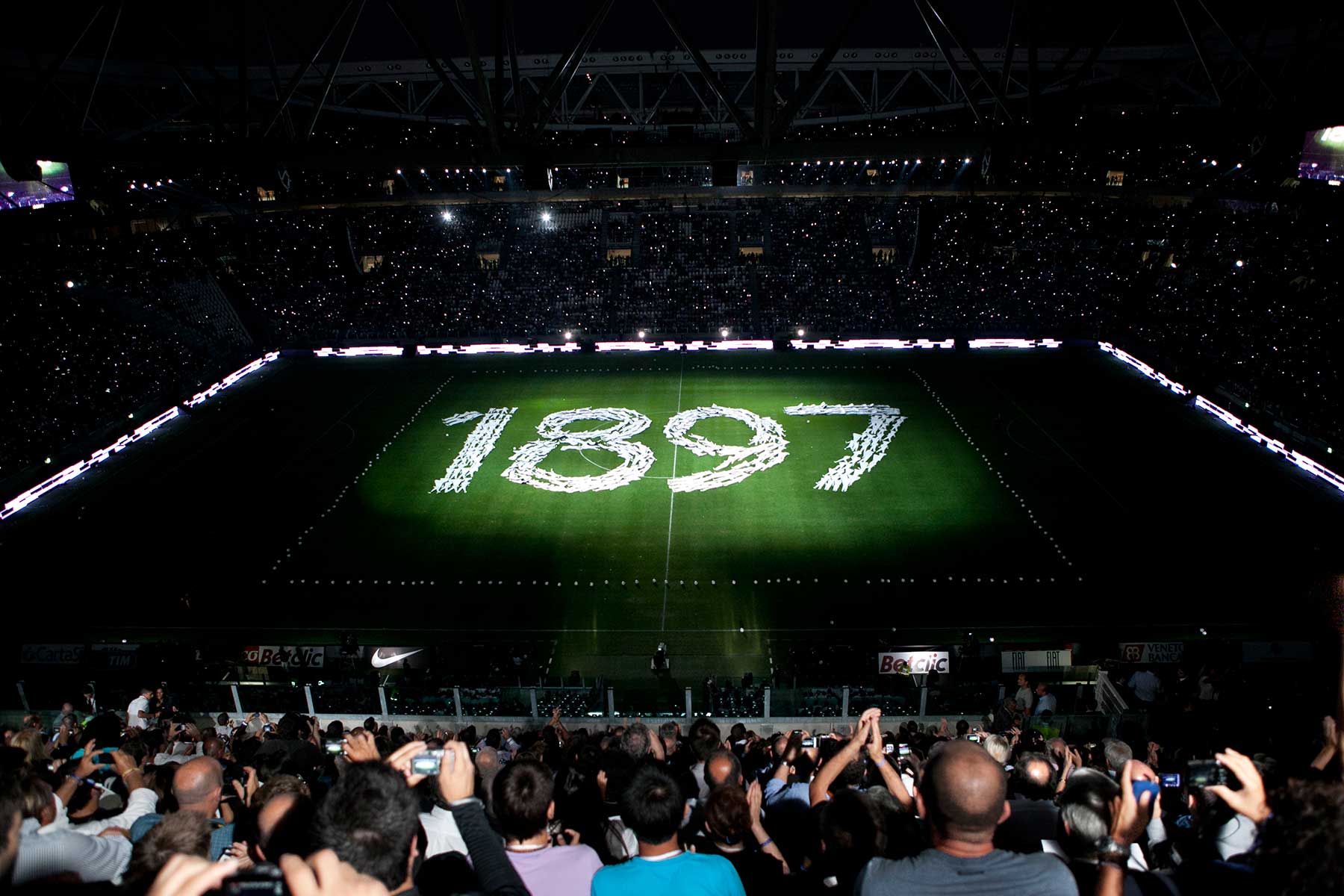
Today, 8 September 2026, is the fifteenth birthday of the Allianz Stadium. Opened on this date in 2011, it remains the most modern and functional football ground in Italy. It looks older than fifteen. It acts older than fifteen. Brimming with impatience, severe in its judgements, quick to darken at the first sign of uncertainty from its team — a crowd that intimidates not the opposition but the Juventus players themselves.
And yet it was not always this way.
The First Decade — the Ground as the Twelfth Man
For the first ten or so years of its existence, the Stadium was something genuinely fearsome. A cauldron. A wall of noise. You can find the testimonies without much effort online — the declarations of opposition players who entered that tunnel and felt something between intimidation and outright terror before a ball had been kicked. The supporters were close to the pitch, the singing was loud and relentless, the volume rose in waves as Juventus built their attacks. The ground was not merely the twelfth man. It was one of the most important players in the squad.
During the nine consecutive Scudetti that defined the first nine years of the Stadium’s history, this was not incidental. Opponents had their ambitions blunted by the atmosphere before the match began. Juventus players were propelled by it to fight for every last centimetre. The ground gave the club something approaching a pre-existing one-goal advantage simply by existing.
The Paradox — a Ground That Has Reversed Its Effect
Today the dynamic has been inverted in a way that would have seemed almost impossible a decade ago. Years of disappointing performances, increasingly weaker squads, the absence of trophies, and in some seasons a football so tedious and an approach so indolent that the cauldron slowly cooled. Today, what once terrified the opposition now fills the home players with anxiety. A Juventus squad that already lacks established characters and strong personalities finds itself crushed by scepticism — booed, whistled, and unsettled by a crowd that dismantles the team’s fragile collective identity at the first sign of difficulty. As happened to Kolo Muani, whistled in a Serie A match that was only his second on home soil.
This is not a new phenomenon, Vaciago is careful to note. Even in Trapattoni’s golden years, a home draw was enough to ice the tribuna and the distinti — prompting the famous curva chant directed at their own supporters that has become one of the period’s defining cultural memories. The Juventus supporter is one who loves the club with absolute passion but has been accustomed to excellence. They know what they want because they have seen it — in Boniperti’s era, in the Trap years, in the nine Scudetti. They are connoisseurs, not spectators. And it was Gianni Agnelli himself who set the tone with that magnificent blend of passion and snobbery, indestructible love and inexhaustible ambition that defines the institutional character of the club’s fanbase.
The Weight of the Shirt — and the Masochism of a Ground That Undermines Its Own Team
The famous observation that the Juventus shirt “weighs heavy on your shoulders” means this, above all else: history has a specific gravity, the habit of winning acts as lead ballast, and you have to know how to wear it. Great champions feel it as light. Ordinary players are crushed by it. In recent years, however, the Stadium’s attitude has taken on something self-defeating in its nature. Beyond the legitimate frustration of genuinely poor seasons and the mediocrity of certain players who have worn the shirt — whistling the home team, placing them in a position where they cannot draw the conventional advantage of playing on home ground, is a form of masochism. Because whilst it is true that victories generate enthusiasm, it is equally true that without enthusiasm it becomes harder to arrive at victories.
The Question Every Supporter Must Answer — on the Ground’s Birthday
The universal charter of supporters’ rights — never written, but printed in the soul of every genuine football fan — establishes that every supporter may think what they wish, that nobody can grant or revoke licences, and that freedom of expression in any form that respects persons is inviolable. Having stated that, Vaciago argues, the Juventus supporters who go to the Allianz Stadium have a choice to make. Is it better to wait for better seasons before recreating the cauldron — or is it worth trying to shorten the wait by pushing a fragile squad with their own roar, strengthening its slender character?
Everyone can give their own answer. On the birthday of a ground that, fifteen years after its inauguration, remains the most modern and functional in Italy — it is a question worth asking.