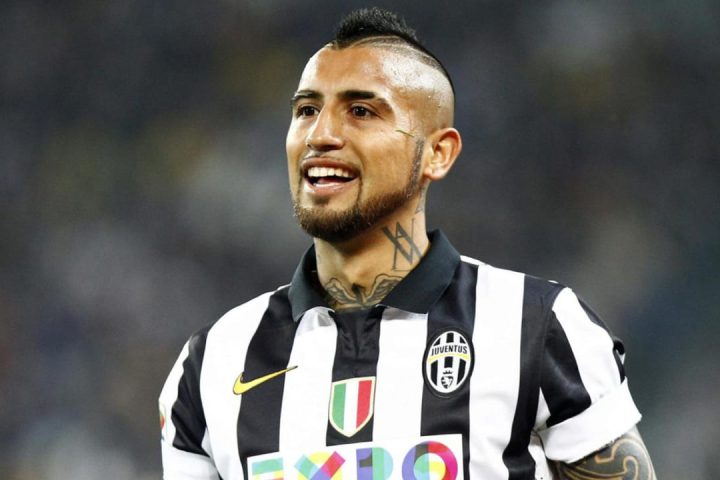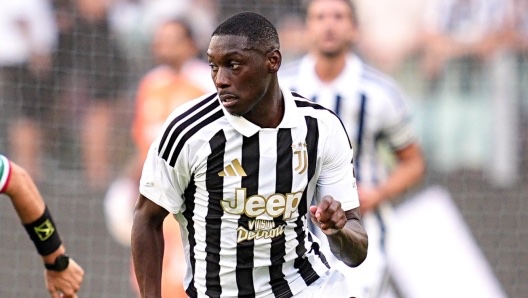


The Continassa’s January planning is not being conducted in a vacuum. It is being conducted against a set of injury timelines that may — or may not — make the most expensive signings unnecessary. Two players above all others hold the balance: Jeff Ekhator and Khéphren Thuram. What they produce when they return, and how much of the squad’s structural need they address, will determine how many of the January targets actually get purchased.
Ekhator — Treated as a New Signing, Expected from December
Spalletti is awaiting Ekhator as though he were an incoming transfer rather than a player already on the books. The former Genoa forward has been halted twice by muscle injuries since late August — a thigh problem that has kept him out for the entire opening phase of the season — and has now missed ten matches in total, appearing on the bench only for the home fixture against Parma. His official debut will not come before the return from the November international break.
The club’s plan is to use him as the third striker from December onwards, giving him a window of several matches to provide a definitive answer about his suitability as a structural solution. The logic is explicit and commercially significant: if Ekhator proves to be a genuine option for Spalletti across December, the January striker priority could — in theory — shift. In practice, Tuttosport notes, this seems unlikely. The board has already promised Spalletti a heavyweight centre-forward, and that commitment remains the north star of January planning. But Ekhator’s December form is the variable that could modulate the ambition and cost of that pursuit.
The Midfield Gap — Not Going to Be Filled Immediately
The most conspicuous absence on the pitch — the midfield quality deficit exposed by Rennes and Lazio alike — is unlikely to be addressed in January. Here the timeline is brutally honest: Thuram, who underwent knee chondroplasty, is expected back in early 2027. Locatelli’s external meniscus suture puts him out until spring. Spalletti is managing this period with the players available, and the most tangible improvement to his midfield options will come not from the transfer market but from a recovery ward. The patience required is significant but the alternatives are constrained by both the UEFA Settlement Agreement budget and the difficulty of finding a high-quality deep midfielder in January at a price that doesn’t compromise the striker pursuit.
The 22 November Turning Point — Venezia at Home, Three Returns Expected
The article identifies Juventus-Venezia on 22 November — the first match after the international break — as the moment of clearest visibility. By that fixture Spalletti should have Conceição back (shoulder injury), González back (soleus), and Çelik back (hamstring). Three important players returning simultaneously. The squad that faces Venezia will be materially stronger than the one playing at Lecce this afternoon, and the subsequent fixtures — with something closer to full strength — will provide the evidence base on which January decisions are finalised.
The second chapter, on Yıldız, Thuram and Ekhator specifically, elaborates on the timelines that shape all of this — Yıldız still targeting December, Thuram early 2027, Ekhator the November return. The interlocking of these recoveries with the January window is the structural reality that every transfer decision must navigate.