
There was once a Juventus that appeared to have become the best expression of a modern, innovative football identity — capable of pressing high, creating chances, and defending with genuine discipline. A few months later, that team seems to have disappeared entirely. The Juventus beaten at Reggio Emilia by Sassuolo and already in crisis after four matchdays looked predictable, slow, and without collective identity. The parallels with the end of last season — when a draw against already-relegated Verona and a defeat to already-safe Fiorentina cost fourth place and Champions League qualification — are impossible to ignore.
Four areas of concern have emerged from Gazzetta’s comprehensive analysis, each accompanied by specific evidence from the opening weeks.
The Formation — Tactical Decisions That Leave the Squad Exposed
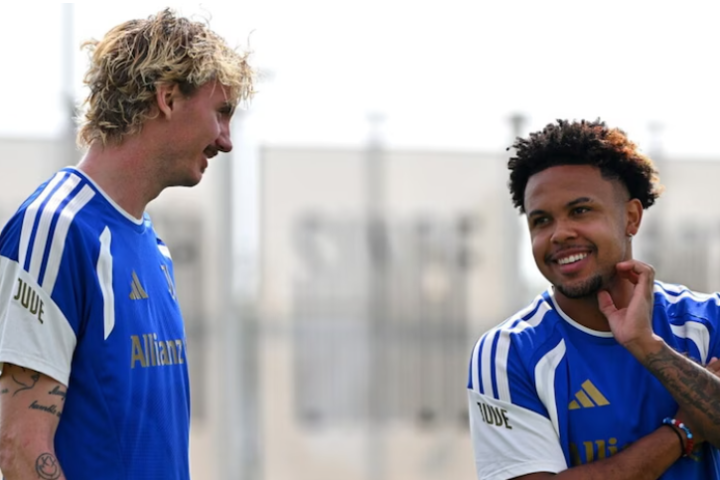
The starting point of the structural criticism concerns the choice to deploy three trequartisti without the midfield cover that makes the system sustainable. Without Weston McKennie — whose defensive intelligence and covering runs give the 4-2-3-1 its defensive foundation — the three-pronged creative attack leaves Juventus dangerously exposed on counterattacks. Against Sassuolo, it cost three goals. Against Milan, it produced a defensive passivity that only Gatti’s late header rescued.
The system itself is not wrong. Spalletti’s 4-2-3-1 is, in principle, one of the most sophisticated and effective structures in European football when properly staffed. But the insistence on maintaining it regardless of available personnel — when the squad’s midfield resources were transparently insufficient — is the first tactical criticism that cannot be easily deflected.
The Attitude — Players Without Conviction in Their Roles
The second dimension concerns the collective character of the squad — and the sense that certain players are not performing with the conviction and determination the shirt demands. Tacchinardi’s observation about Gatti’s celebration reverberates here — not because celebrating a late equaliser is wrong, but because it captures a broader mood. Bremer, the new captain, produced his worst defensive performance since his return from injury against Sassuolo. Kalulu — the squad’s most-used player last season — has looked two gears below his best in every match so far. Lucumí, signed precisely for his ability to build from the back, was replaced at half-time in his second competitive appearance.
The Choices — Substitutions That Are Difficult to Explain
As Sabatini’s Pressing panel made clear in the days following the Sassuolo defeat, the substitution decisions — most notably the failure to introduce Gatti in a match where aerial crosses were Juventus’s primary attacking weapon — have generated specific and legitimate questions. The introduction of Oboavwoduo in the 87th minute for a back-three situation created by a match already lost was, for Sabatini, symptomatic of choices that did not clearly follow the logic of the game’s situation.
The Communication — a Manager Who Seems at Odds with His Surroundings
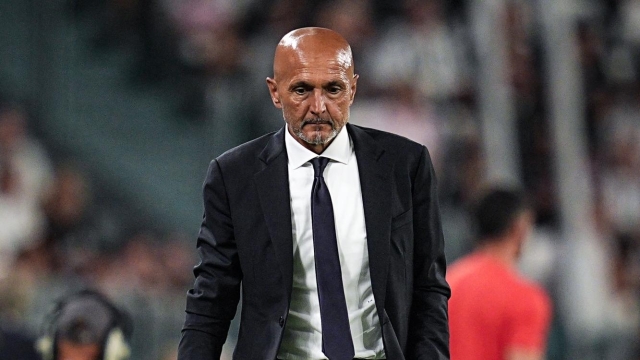
The most uncomfortable critique concerns Spalletti’s public communication in the aftermath of the Sassuolo defeat — specifically the post-match exchange with the interviewer, and the broader sense of a manager increasingly at odds with the environment around him. Panorama’s analysis of his demeanour identifies a pattern: the confrontational tone with journalists, the inconsistency in his public positions on Kolo Muani — describing him as the ideal centre-forward for months, publicly challenging him after Frosinone, then insisting the interpretation had been wrong — and the “don’t cry” remark that opened his Sky interview.
Sandro Sabatini’s verdict was the most direct: “I no longer recognise Spalletti. The Spalletti of the good times — the manager who taught us all something, who had the tactical acuity and the communicative intelligence that defined him at Napoli and with Italy — I do not see him at Juventus right now.”
Whether the real Spalletti is about to re-emerge — as the return of McKennie, the Europa League’s fresh start, and a squad beginning to recover its resources would suggest — or whether the Sassuolo defeat represents the beginning of a more prolonged crisis, is the question that Thursday’s NEC match and Sunday’s Atalanta fixture will begin to answer.