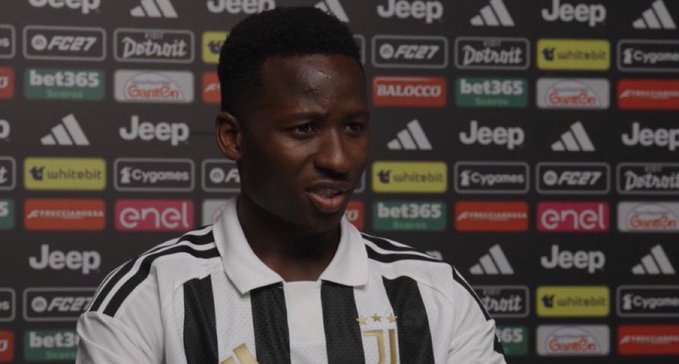


Luciano Spalletti spoke exclusively to Tuttosport in the final days of the international break — and the second part of the interview, published Monday morning, contains some of the most personally candid and tactically illuminating passages of his entire Juventus tenure so far.
“Juventus Gives You No Rights — You Are Measured by What You Are Willing to Give Every Day”
On the nature of the institution he manages and what it demands of everyone inside it: “Juventus gives you no rights and measures you by what you are willing to give every day. In football you can win with a single shot on target — but it is impossible to earn the respect of the supporters without deserving it. We will need to be worthy of them: destroy the pitch and wear out the ball, then we’ll see where this attitude takes us.”
“My Son Left Because of Me — He Didn’t Want to Be Associated With My Name”
The most personally revealing passage of the entire interview concerned his son Federico — who had been working at Juventus as a scout before Spalletti arrived, and who chose to leave rather than remain in an environment that would inevitably connect his professional identity to his father’s. “My son Federico, when I arrived at Juventus, told me: ‘Are you really coming here? OK, then I’m leaving.’ He was already here as an observer and has now gone to Genoa. He didn’t want to be associated with me — he needed to have his own path as a talent scout, and he genuinely went. He had told me clearly.”
“Last Season? Not Maintaining the Very High Level We Expressed for Almost the Entire Season — That Cost Us the Champions League”
On the single element of last season that caused him the most pain: “Not having maintained the very high level we expressed for almost the whole season. That cost us the Champions League.” The assessment is characteristically precise: not the result, not the final position, but the specific failure of consistency that turned a Champions League qualification campaign into a near-miss.
“With Carnevali We Are Linked by Professionalism, Friendship, and Embraces”
On his relationship with the Juventus CEO and the broader sporting direction: “We are linked by professionalism, friendship, and embraces. The directors — including Massara and Ottolini — are competent and reliable. That is enough for me to feel well.”
“Alajbegovic Can Truly Surprise — We Must Create a More Familiar Context for Him”
On the 19-year-old Bosnian trequartista: “Alajbegovic is someone who can truly surprise. We need to manage to create a more familiar and calm context around him. That way he can grow more quickly. A strong relationship must be created between the squad and the potential of individual players.”
“McKennie — We Created the ‘Weston Zone.’ The University Is the New Football Specialisation”
The most vivid tactical image of the entire interview arrived in Spalletti’s characterisation of McKennie’s unique position in the squad’s collective consciousness. “For McKennie we have created the ‘Weston zone’ — he knows every corner of the pitch. He is a beautiful and lively person who shows himself to you. He says: ‘I am made like this.’ He is a great man who can do a great many things — defensive midfielder, central midfielder, trequartista, he plays wherever he wants. Wes has a rucksack full of medals to distribute to those who have coached him and those who will. The university is the new specialisation in football — knowing the whole pitch is now an obligation.”
“Zhegrova — If He Just Completes Himself a Little More, You Will See: He Can Become a Top”
The sentence that will travel furthest from this interview is the one that most unexpectedly reframes the Zhegrova situation as one of pure optimism rather than institutional frustration. “If he only completes himself just a little more — you will see Zhegrova. He can become a top player.” A manager’s public expression of faith in a player who spent the whole summer in transfer speculation and has played 72 competitive minutes. The potential, Spalletti insists, is entirely real. The obligation now is for the player — and for the system around him — to create the conditions in which it can be expressed.