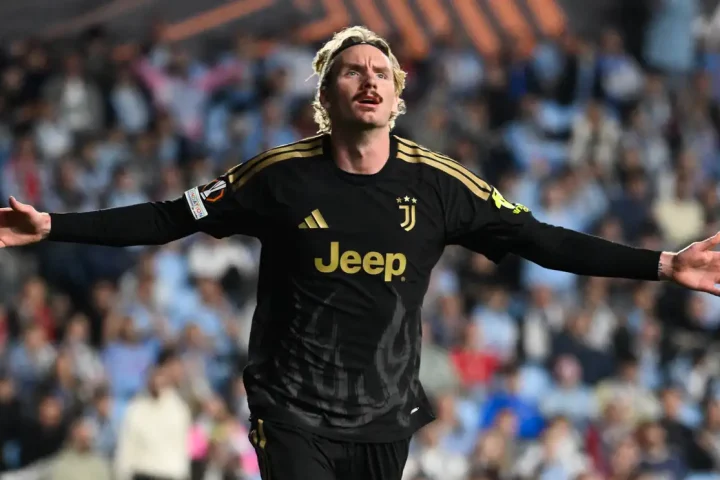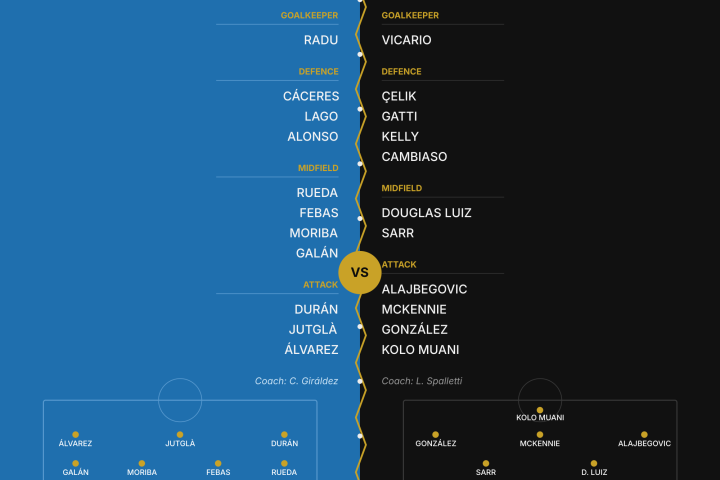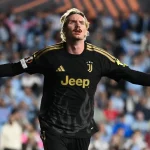

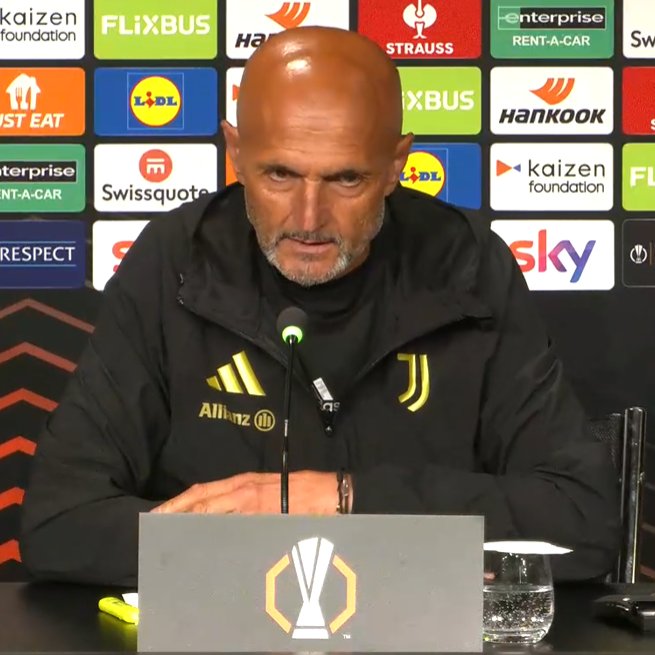
Woltemade and Kolo Muani deliver the second Europa League victory. A difficult match — particularly in the first half — that Juventus turned around in the dying moments at the Estadio Balaídos for a 2-1 comeback win. Spalletti’s decision to send on Kolo Muani in the second half and keep Woltemade on the pitch was vindicated by the result. And yet, in the post-match interview on Sky, the manager delivered one of his most pointed and most specific assessments of the season — not satisfaction, but a detailed critique of what went wrong, and three institutional moments that will define the narrative of the days ahead.
“Kolo, You Must Stay There!” — the Positional Instruction Delivered on Live Television
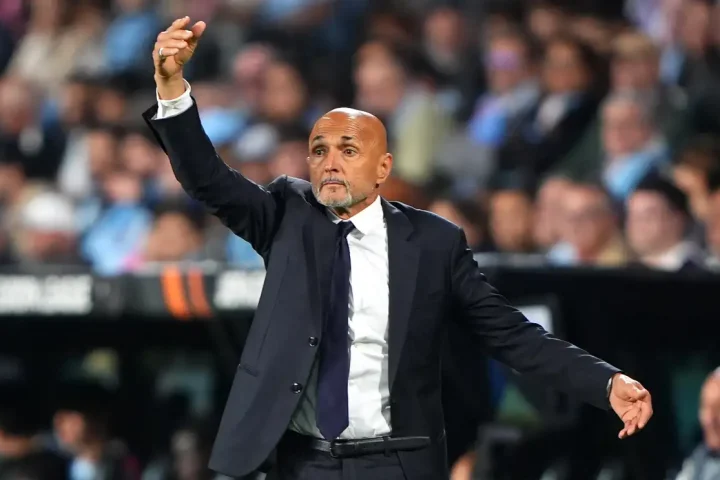
The headline is the image itself: Spalletti, addressing the camera after the final whistle, directing an explicit individual instruction to his centre-forward as if he were still on the training pitch. “Kolo opened up like this and interpreted it too much as a wide player — he had to stay in that half-space because the channel was free for Cambiaso.” The specific technical diagnosis — Kolo Muani drifting wide when the inside channel was the correct option — is delivered publicly, without ceremony, as if the coaching session continues through the broadcast. It is both a critique and a teaching moment: the manager trusts the player enough to correct him on national television because the correction is meant to help.
The broader first-half problem: “We didn’t manage the ball with security in the moments of play either — there were these continuous turnovers, we always arrived late to press, they found the free man in the middle and forced us into long reconstitutions with a lot of running.” And on the evolution during the match: “Towards the end Woltemade was a little tired while Kolo in a one-on-one could be decisive — he is a strong player and I chose accordingly, but then it is the players on the pitch who seek out their own spaces.”
The most pointed self-assessment: “We were slow at everything in the first half. They are good at staying organised — when we won the ball back we weren’t quick to get forward, and when we lost it we were slow in our pressing, very different from Cagliari… Cagliari was a different match: even if you don’t win it, we played better there than tonight.”
Conceição’s Furious Exit — the Bench-Punching Incident and Spalletti’s Explanation
The second chapter — “La rabbia di Conceicao e la spiegazione di Spalletti” — addresses the most visually striking moment of the evening. When Conceição was substituted, he walked directly to the bench, punched it repeatedly, and went straight to the dressing room — an explosive display of frustration that was captured in full on camera. The linked Tuttosport article from the same evening describes the scene in full detail. Spalletti’s explanation on Sky is the institutional response: the manager addresses the raw emotion of a player who believes he is performing and wants to play, contextualises it within an overloaded fixture schedule, and — implicitly — places it in the category of emotions he considers healthy rather than destructive. Conceição is not being disciplined. He is being managed. The distinction matters.
Koopmeiners — The Explicit Verdict
The third chapter — “La bocciatura di Koopmeiners” — is the one that will travel furthest through the Friday morning press cycle. The Dutch midfielder did not play. The specific characterisation of his non-inclusion — not rotation, not rest, but “bocciatura,” which in Italian carries the specific connotation of a formal failing grade or a rejection on merit — reflects Spalletti’s own language in the interview. The three-month trial period continues. The Serbia free kick and the Xavi central defensive experiment were not enough. The manager who demanded more venom from his squad did not find it in Koopmeiners at Celta Vigo, and said so on live television.