

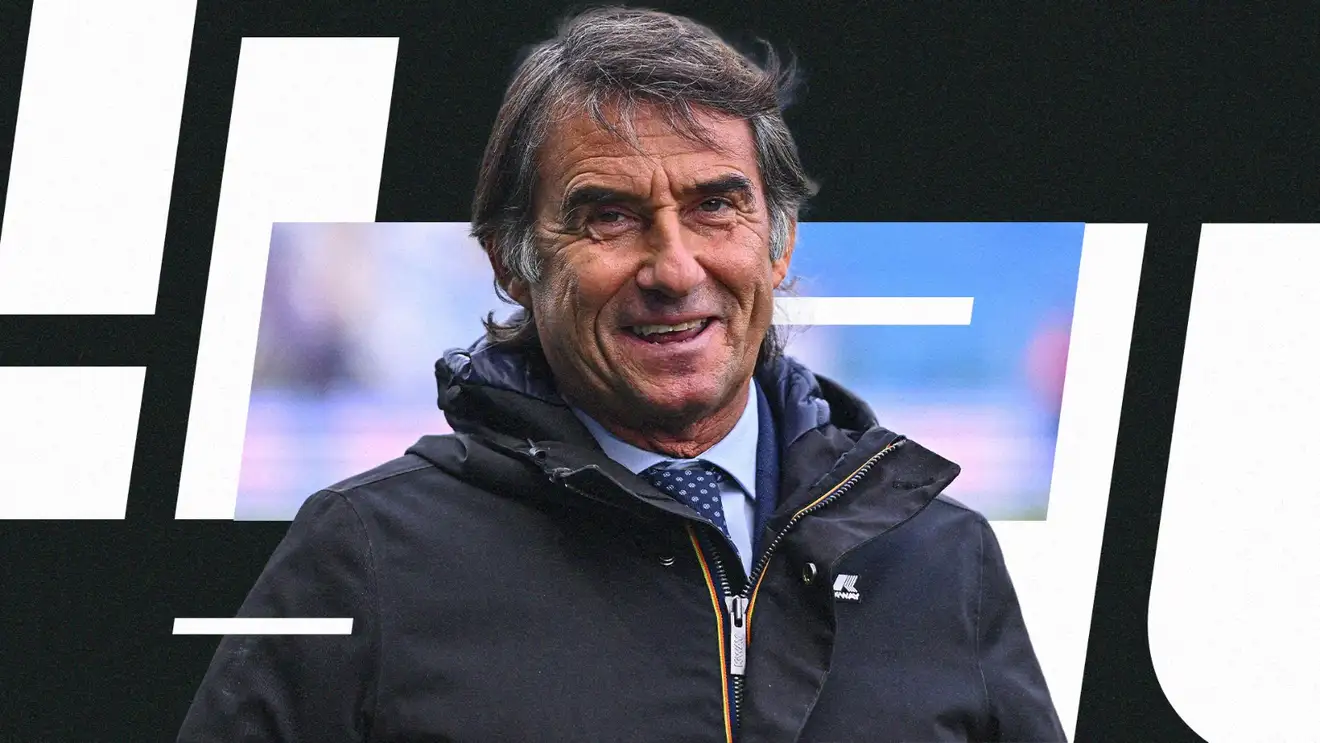
The bell rang at 8am at the Continassa on Monday morning — the first official working day of Giovanni Carnevali as Juventus’s new chief executive and general director. For a man who built Sassuolo into one of Italian football’s most admired institutions over more than a decade, it represents an entirely different kind of challenge. The scale is incomparable, the scrutiny relentless, and the expectations enormous. But the foundations of his approach are already clear.
A Weekend of Calls — and a Meeting With Spalletti in Forte dei Marmi
The days since Carnevali’s appointment have been a whirlwind of congratulatory calls and first operational conversations, with his phone barely having a moment’s rest. Crucially, he also took the opportunity during the weekend to travel to the famous coastal resort of Forte dei Marmi — not purely for leisure, but to sit down face to face with Luciano Spalletti and begin mapping out the first moves of the new administration together.
It is exactly the kind of direct, relationship-first approach that distinguishes Carnevali from his predecessor. At 65, with forty years of experience in professional football, he knows virtually everyone in Italian football and already enjoys excellent relationships with key figures both inside and outside the club — from Giorgio Chiellini downwards. Stepping into this new reality will not be a leap into the dark.
The Books Come First
The first formal act of Carnevali’s tenure will be financial rather than footballing: a meeting with the club’s finance team to take full possession of the accounts and understand in precise detail the parameters within which Juventus can operate this summer. Of particular importance is the outstanding settlement agreement with UEFA, which will define the exact scope of the club’s transfer activity in the window now under way.
Only once that picture is fully clear can the strategy be properly set. The baseline principle is already established: sales must come before significant purchases. Selling intelligently is one of Carnevali’s defining strengths — and those skills will be needed immediately, with the ongoing negotiations for Sorloth and Dibu Martínez already at advanced stages and requiring resolution.
Two Counterintuitive Possibilities Worth Watching
Two of the most intriguing financial calculations involve players whose situations appeared settled. First, keeping Dušan Vlahović on a renegotiated contract could paradoxically make more financial sense than letting him leave for free — a logic that Carnevali, as a commercially minded operator, will find worth exploring. Second, selling Gleison Bremer — despite his €58 million release clause — may not actually be necessary to balance the books if other, less obvious solutions can be found.
Both points illustrate the kind of nuanced, creative financial thinking that Carnevali brings to the table — a willingness to challenge assumptions and find value where others see only problems.
The Enormity of the Task
The scale of what awaits Carnevali at the Continassa is significant. Juventus are not Sassuolo — the weight of history, the intensity of scrutiny, and the complexity of the club’s financial obligations are of a different order entirely. But the principles that made him one of Italian football’s most respected administrators — patience, relationship-building, commercial discipline, and an unerring sense of timing — travel. Day one is done. The real work has begun.