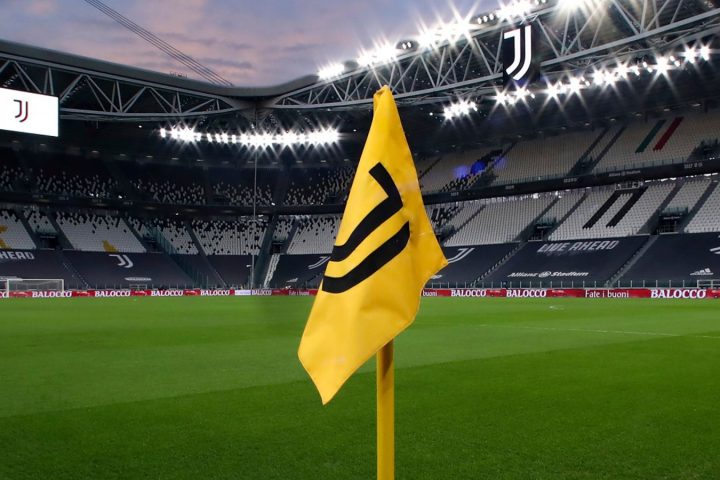


Two hundred and fifty million euros. And not only for the transfer market — not even primarily for it. Juventus are looking forward, and looking forward means going beyond the pitch, its dynamics, what can be controlled and what takes its own course. Of the capital increase approved by the board of directors in late September, a substantial portion will be directed towards strengthening the club’s patrimonial assets. Beginning with the infrastructure: the Allianz Stadium, the Continassa training complex, and the Vinovo facility, whose combined residual book value currently sits at approximately €180 million — against a market value estimated at almost three times that figure.
The Allianz Stadium — From 90 Million in Revenues Towards a Premium Experience
The Stadium received significant work this past summer — 182 seats were added, of which 80 in premium areas — and is now the focus of a further commercial evolution that closely follows the hospitality models being developed at the elite level of European football. The plan involves tiered access models: exclusive bars, premium service packages, supplementary hospitality experiences available at additional cost. The objective is twofold — an improved matchday experience for supporters and a sustained increase in matchday revenue.
The numbers justify the investment: the Allianz generated over €90 million in combined revenues last season, of which €8 million from hospitality and a further €2 million from special initiatives including summer concerts and other sporting events. Since the ground opened in 2011, Stadium revenues have tripled. The growth has been consistent — Covid aside — and the current leadership sees further headroom.
J-Medical, J-Hotel and a New City-Centre Clinic — Expanding the Medical Asset
J-Medical features explicitly in the capital allocation discussion. The Juventus medical centre — which Dr Pegoli and his surgical team have used this season for Kolo Muani’s finger surgery, Licina’s wrist, and the ongoing rehabilitation of Thuram and Locatelli — is earmarked for a significant growth project in line with the centre’s considerable commercial success in recent years. The specific plan includes a new opening in central Turin, separate from the Continassa complex: a medical facility positioned in the heart of the city to serve a broader patient base and generate revenue independently of match schedules. The J-Hotel, purchased outright just a year ago after several years of operational difficulty compounded by pandemic residue, is now generating profit and is included in the asset strengthening programme.
The Barcelona Blueprint — a 5,000-Seat Venue for Women and Next Gen
The most forward-looking and institutionally significant section of the article concerns the plan that mirrors Barcelona’s model at the Nou Camp: a dedicated stadium for the Women’s team and the Next Gen, approximately 5,000 seats in capacity, to be built in the vicinity of the Allianz Stadium itself. The reference point is the Estadio Johann Cruyff — Barcelona’s 6,000-seat second venue positioned immediately adjacent to their main ground — and the logic is direct: a co-located satellite stadium increases club identity and supporter affinity for the secondary teams, generates independent commercial revenue, and removes the operational absurdity of the Women’s team playing in Biella and the Next Gen at Alessandria.
The specific site under active consideration is the PalaTorino area — formerly the PalaStampa — whose concession is currently held by the Togni family and runs for approximately two more years. When that concession expires, the municipality would have strong incentives of its own to redevelop the zone. Juventus, meanwhile, is separately working on the opening of a new federal training centre at Venaria — not far from the Continassa — which would provide further infrastructure capacity.
The club is direct about the imperative: the Women’s team and the Next Gen must eventually stand on their own financial feet. A dedicated ground in Turin, adjacent to the first team’s stadium, is the most powerful single step towards making that possible. The €250 million capital increase has created the conditions in which what was previously utopia may now become buildable. The question is timing. The answer, the article suggests, is sooner rather than later.